Hearing loss affects hundreds of millions of people worldwide, and, as global populations age, that number is only expected to grow.
According to the World Health Organization (WHO), more than 1.5 billion people around the globe (nearly 20 percent of the population) are living with hearing loss. This number is anticipated to grow to 2.5 billion as early as 2050, with 700 million people expected to require hearing support in the form of assistive listening technology, among other interventions.
In many public places like airports, theaters, houses of worship, and transit hubs, following announcements or enjoying shared audio experiences can be difficult or even impossible for those with hearing loss. That’s where Bluetooth® technology is stepping in to help.
Driving more inclusive listening experiences

By adding standardized support for hearing aids and other hearing instruments, Bluetooth is redefining what’s possible in hearing assistance, making it easier than ever for those with hearing loss to connect to phones, tablets, TVs, and more.
Auracast™ broadcast audio takes this a step further by allowing anyone with an Auracast™ compatible device to join audio broadcasts in public spaces. That means people with hearing aids, earbuds, or headphones can access audio straight from a venue’s public address or sound system, using their own personal device, with no need to borrow or request special equipment.
“Hearing and understanding speech in various environments can be a daily struggle for people with any degree of hearing loss,” said Barbara Kelley, executive director of the Hearing Loss Association of America. “Having choices in technology to meet the varying needs of people with hearing loss is critical. The advent of technologies like Auracast™ broadcast audio has the potential to give people who wear hearing aids and cochlear implants an important new option for hearing access in their everyday lives.”
Making audio accessibility mainstream
The Bluetooth community emphasizes that environments, technologies, and services should be created to remove barriers and foster inclusion, ensuring that innovations serve everyone, regardless of physical, sensory, or cognitive differences. Accessibility is not an add-on but a design principle.
Many assistive listening systems (ALS) often feel separate and stigmatizing, requiring users to request special equipment and revealing personal needs in public settings. Auracast™ broadcast audio supports a private, high-quality audio experience without the physical limitations of other assistive listening solutions.
“While current assistive listening systems, such as inductive loops, have been providing great benefit to people with hearing loss, they suffer from a number of challenges that have limited their deployment, including poor quality, high cost, and lack of privacy,” said Nick Hunn, CTO of WiFore. “Auracast™ broadcast audio is well positioned to become an advanced, new assistive listening system that will be significantly easier and lower cost to deploy while offering higher audio quality and greater privacy, improving audio accessibility, and promoting better living through better hearing.”
Auracast™ broadcasts make audio accessibility feel mainstream and modern. By enabling anyone to receive high-quality, direct-to-ear audio using their own personal devices, it creates a shared, inclusive experience — whether you are using hearing aids, earbuds, or headphones.
Auracast™ broadcast audio is accessible by design, not exception.
Removing barriers to assistive listening deployment
Installing traditional assistive listening systems can be complex, time-consuming, and often costly, making them impractical for many venues and limiting availability. Because of the time, expertise, and investment typically needed, and the perception that these systems only serve a narrow audience, assistive listening systems are often under-deployed, leaving many public spaces without inclusive audio solutions.
Auracast™ broadcast audio dramatically simplifies deployment, reducing setup time from days to minutes, making it easier for venues of all sizes to roll out inclusive audio. As such, it is expected to expand the availability of assistive listening systems in public spaces, benefiting not only those with hearing loss but also anyone seeking to hear better in crowded or noisy environments.
“ABI Research expects the wireless and assistive listening industries to rapidly embrace Auracast™ technology, enabling more and more people to tune in to public broadcasts and provide those with hearing loss an easy-to-use, standardized, interoperable, and consistent assistive listening experience,” said Andrew Zignani, research director at ABI Research.
Transforming listening experiences in the real world
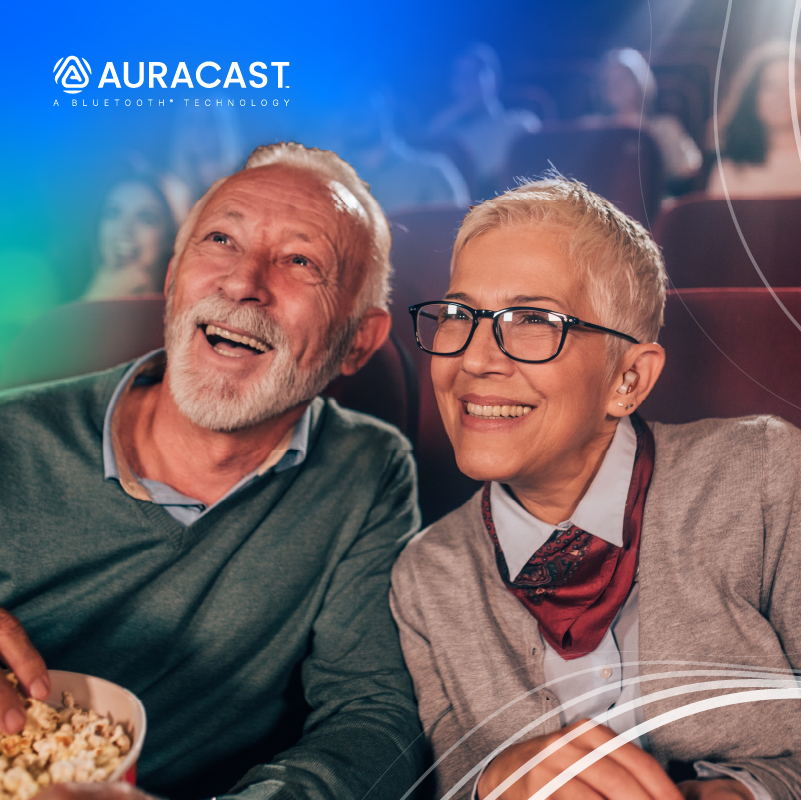
Auracast™ broadcasts enable a high-quality audio experience for everyone, even in shared spaces, addressing audio accessibility challenges by offering a bring-your-own-device (BYOD) model. This allows users to connect directly to a location’s audio broadcast in places like airports, theaters, classrooms, or stadiums using personal hearing aids, earbuds, headphones, or cochlear implants, eliminating the need for venues to distribute and maintain specialized receivers.
ABI Research predicts that, by 2029, 1.5 million public venues are expected to become Auracast™ locations. But this is not just hopeful forecasting. Already, real-world locations have deployed and are continuing to deploy Auracast™ transmitters to provide a more inclusive audio experience for visitors.
Venues from the Sydney Opera House and the CCI at the University of the Arts London, to churches in the US and UK are early adopters of this technology, and they have seen strong demand and positive feedback. Auracast™ broadcast audio has also been successfully tested in high-traffic environments like Oslo Central Theater, St. Paul’s Cathedral, and at CES 2025, demonstrating its versatility and scalability.
“It was a life-changing event for me to be able to pick up my phone and walk through a noisy place and be able to hear like everyone else,” said Cheri Perazzoli, a hearing-health advocate. “In addition to better sound quality, better enjoyment of music, and a higher fidelity, if all places adopt Auracast™ broadcast audio, and everything is done with care to eliminate latency and other issues that we have had with other technologies, it would open a new world for us.”
See more real-world examples of where Auracast™ broadcast audio is already available.
Auracast™ broadcast audio and other ALS technologies
Of course, while Auracast™ broadcast audio will likely become the new standard in assistive listening, existing systems like hearing loops still have a vital role to play. In panel discussions held at HLAA 2025 earlier this year, it was noted that the best practice for venues is to add Auracast™ broadcasts alongside current systems, allowing users to transition at their own pace. This hybrid approach ensures compliance with accessibility laws while preparing for the future.
So, for those familiar with a legacy assistive listening system, there’s no need to worry about locations adopting rip-and-replace assistive listening infrastructure strategies. Auracast™ broadcast audio seamlessly coexists with older systems.
Looking ahead
According to ABI Research, more than 30 million Bluetooth® hearing aids and OTC hearing aids will ship annually by 2029. This clearly indicates that we can expect a future where accessible audio technology is no longer a niche solution but a standard part of consumer products, benefiting everyone, including those with hearing loss.
Thanks to the ongoing innovation and dedication of the global Bluetooth SIG member community, Bluetooth® technology continues to enhance lives. One day soon, accessing audio in public spaces using Auracast™ broadcast audio will be as common and expected as connecting to the internet using Wi-Fi.
Learn more about how Auracast broadcast audio can help you enjoy more inclusive listening experiences in public spaces.
聴覚に障がいのある人は世界で数億人に上り、世界的な高齢化が進む中、その数はさらに増加すると予想されています。
世界保健機関(WHO)によると、世界で15億人以上(全人口の20%近く)に聴覚障がいがあります。その数は早ければ2050年には25億人に達すると予測され、その中でも約7億人が、聴覚補助技術などによる支援を必要とするとされています。
聴覚障がいのある人にとって、空港、劇場、礼拝施設、交通機関などで流れるアナウンスを聞くことや、共有された音楽を楽しむことは難しく、場合によっては不可能ですらあります。しかし、Bluetooth®技術を活用することで、そうした状況が改善できます。
よりインクルーシブな体験の推進
補聴器とその他の補聴機器をサポートする標準規格を追加することで、Bluetoothは聴覚補助において可能なことを根本から変え、聴覚障がいを持つ人々が従来にないほど携帯電話、タブレット、テレビなどと接続して利用しやすくします。
Auracast™ ブロードキャスト オーディオはこれをさらに一歩進め、Auracast™対応デバイスがあれば誰でも公共の場でオーディオブロードキャストを受信できるようにします。つまり、特別な機器を借りることやリクエストする必要なく、自分の補聴器、イヤホン、ヘッドホンなどを使い、施設の構内放送・音響システムなどの音声を直接聞くことができます。
HLAA(全米難聴者協会)エグゼクティブディレクターのBarbara Kelley氏は次のように述べています。「さまざまな環境の中で話を聞き取り、理解することは、聴覚障がいがある人にとって、障がいの程度に関わらず日々直面する課題です。聴覚障がい者の多様なニーズに対応する技術には、さまざまな選択肢があることが重要です。Auracast™ ブロードキャスト オーディオの登場のような技術的進展は、補聴器・人工内耳の装用者が日常生活で音声を聞く上で、新しく重要な選択肢をもたらす可能性があります」
音声アクセシビリティを当たり前のものに
Bluetoothコミュニティでは、環境、技術、サービスはバリアフリーの実現とインクルージョンを育むために生み出されるべきものであり、さまざまなイノベーションは身体、感覚、認知面での違いに関わらずあらゆる人の役に立つことが保証されるべきだということを強く打ち出しています。アクセシビリティは後付けの機能ではなく、設計の基本原則であるべきです。
多くの聴覚補助システム(ALS)では、利用者は特別な機器を借りる必要があり、そのために公共の場で個人的な事情を明かす必要があることから、特別視や烙印を押されるように感じる場合が多くあります。Auracast™ ブロードキャスト オーディオでは他の聴覚補助デバイスを必要とせず、プライバシーを守りながら高音質なオーディオ体験を提供できます。
WiForeのCTOであるNick Hunn氏は次のように述べています。「ヒアリングループなどの従来の聴覚補助システムは、聴覚障がいのある人々のために大いに役立ってきました。しかし、音質の低さや高額な費用、プライバシーの欠如といった数々の課題があり、導入する施設には限りがありました。これに対し、Auracast™ ブロードキャスト オーディオは、より高度で新しい聴覚補助システムとなる大きな可能性があります。従来のシステムに比べて容易かつ低コストで導入でき、高音質で、プライバシーも強化されています。誰もが音声を聞きその情報を活用できるための環境の改善と、音声をより良く聞き取れることによる暮らしの充実に貢献するでしょう」
Auracast™ ブロードキャスト オーディオは、誰もが音声を利用できる環境を、現代的で当然のものにします。使用しているデバイスが補聴器、イヤホン、ヘッドホンのいずれの場合にも、誰もが自分のオーディオ機器を使い、高音質な音声を直接受信できるため、皆で共有できるインクルーシブな体験が実現できます。
Auracast™ ブロードキャスト オーディオはそもそもアクセシビリティに対応した設計となっており、特別な機能としてアクセシビリティを提供するものではありません。
聴覚補助の導入への障壁をなくす
従来の聴覚補助システム(ALS)の導入は複雑で時間がかかり、費用も高額になる可能性が高いことから、多くの施設にとって現実性がなく、利用できる場が限られていました。ALSは、一般的に時間と専門知識、投資が必要なことに加え、対象となる利用者が少数という認識から、整備されない場合も多くあります。そのため多くの公共の場には、インクルーシブな音響システムが備えられていないのが現状です。
Auracast™ ブロードキャスト オーディオの導入ははるかに簡略化され、従来は数日かかっていた導入が数分で済むため、施設の規模を問わず、より容易にインクルーシブな音声が提供できます。このため、公共空間における聴覚補助システムの普及が進むことが予想され、聴覚障がい者だけでなく、雑踏や騒音の中での聞き取りやすさを求めるすべての人に役立つと考えられています。
ABI ResearchのリサーチディレクターであるAndrew Zignani氏は次のように述べています。「ABI Researchではワイヤレスおよび聴覚補助業界においてAuracast™技術の採用が急速に進み、公共の場でブロードキャストを受信できる人が増えると予想しています。聴覚障がいを持つ人々に、簡単に使え、標準化され、相互運用性と一貫性のある聴覚補助体験が提供されるようになるでしょう」
オーディオ体験を大きく変えた実例
Auracast™ ブロードキャストによって公共の場でもすべての人が高品質のオーディオを聞くことができ、アクセシビリティの課題解決にBYOD(bring-your-own-device)方式を採用しています。空港、劇場、教室、スタジアムなどのブロードキャストを個人の補聴器、イヤホン、ヘッドホン、人工内耳で直接受信できるため、施設側で専用の受信機を配布、管理する必要がありません。
ABI Researchは、2029年までに公共の場150万箇所にAuracast™が導入されると予測していますが、これは単なる希望的観測ではありません。既に、来場者によりインクルーシブなオーディオ体験を提供するためにAuracast™送信機を導入している施設があり、その数は増え続けています。
いち早く導入している施設にはシドニー・オペラハウスやロンドン芸術大学のクリエイティブ・コンピューティング研究所(CCI)、米国・英国の教会などがありますが、利用希望も多く、反応も上々です。Auracast™ ブロードキャスト オーディオはオスロ中央劇場、セントポール大聖堂、CES 2025など人が多く集まる場所でも試験運用に成功し、その汎用性と拡張性を証明しています。
聞こえの健康に関する活動家のCheri Perazzoli氏は次のように述べています。「電話に出て、騒がしい場所を歩きながら他の人と同じように聞くことができるというのは、私にとって人生を変える体験でした。音質が良くなり、音楽がより楽しめるようになって、音の忠実性も高まったことに加え、もしすべての場所でAuracast™ ブロードキャスト オーディオが採用され、他の技術に見られたような遅延その他の問題が解決するよう入念な対応がなされたなら、私たちにまったく新しい世界が開かれることになるでしょう」
Auracast™ ブロードキャスト オーディオが既に利用できる実際の施設の数々は、こちらでご覧いただけます。
Auracast™ ブロードキャスト オーディオと他のALS技術
Auracast™ ブロードキャスト オーディオは聴覚補助の新しいスタンダードになると期待される一方で、当然ながらヒアリングループなどの従来のシステムも引き続き重要な役割を果たしていくことになります。今年開催されたHLAA 2025のパネルディスカッションでは、施設にとって最も効果的なアプローチとして現行システムにAuracast™を追加し、利用者が自分のペースで移行できるようにする併用方式が推奨されました。このハイブリッドなアプローチにより、アクセシビリティ関連の法令を順守しながら、将来への備えを実現できます。
従来の聴覚補助システムに慣れた方でも、施設が聴覚補助関連のインフラを完全に置き換える心配はありません。Auracast™ ブロードキャスト オーディオは従来のシステムとシームレスに共存できます。
今後の展望
ABI Researchによると、Bluetooth®補聴器およびOTC補聴器の年間出荷台数は、2029年までに3000万台を超えます。これは、音声アクセシビリティを提供するための技術がもはやニッチなソリューションではなく、消費者向け製品におけるスタンダードの一部となり、聴覚障がい者を含むすべての人にメリットをもたらすことを明確に示しています。
世界中のBluetooth SIGメンバーの継続的なイノベーションと献身的な取り組みにより、Bluetooth®技術は人々の暮らしを豊かにすることに貢献し続けています。近い将来、Auracast™ ブロードキャスト オーディオを活用した公共の場での音声受信は、Wi-Fiを利用したインターネット接続と同様に、一般的で当たり前のものとなるでしょう。
Auracast ブロードキャスト オーディオが公共の場におけるオーディオ体験をよりインクルーシブに変える仕組みについて、詳しくはこちらをご覧ください。
