
Insights explored in this article:
- Bluetooth® technology helps organizations reduce energy consumption and environmental impact by enabling lighting and HVAC systems to respond dynamically to real-time occupancy and environmental conditions instead of fixed schedules
- Bluetooth® Networked Lighting Control (NLC) supports sustainability goals by minimizing wasted energy, extending the lifespan of building assets, and providing the data needed to continuously improve operational efficiency
- Through open, interoperable standards that simplify deployment and retrofits, Bluetooth® connectivity makes scalable sustainability initiatives more accessible, helping commercial buildings lower emissions, reduce waste, and operate more responsibly over time
記事のポイント
- Bluetooth®技術は、照明とHVAC(冷暖房・換気設備)システムがリアルタイムの在室状況・環境条件に動的に応答できるようにします。固定スケジュールへの依存から脱却し、エネルギー消費と環境負荷の削減を支援します
- Bluetooth®ネットワーク照明制御(NLC)は、エネルギーの無駄を最小限に抑え、建物資産の寿命を延ばし、運用効率の継続的な改善に必要なデータを得られるようにすることで、持続可能性目標の実現を支えます
- Bluetooth®接続はオープンで相互運用可能な標準であるため、より容易に導入・改修でき、持続可能性に向けた大規模な取り組みをより身近にします。商業ビルでの排出量・廃棄物の削減と、より責任ある長期運用を後押しします
For decades, Bluetooth® technology has been synonymous with powering headphones, smartphones, and automotive infotainment systems. However, its role has expanded far beyond consumer convenience. Bluetooth has emerged as a foundational wireless protocol for commercial and industrial environments, quietly enabling a new generation of solutions that are helping organizations operate more sustainably.
From energy optimization in buildings to intelligent automation across infrastructure, Bluetooth connectivity is reshaping how systems sense, respond, and evolve. In doing so, it is helping sustainability move from aspiration to everyday operation, without requiring organizations to compromise performance or productivity.

Sustainability across commercial operations
Sustainability is often framed in terms of reduction: less energy, fewer emissions, and minimized waste. But in practice, meaningful sustainability gains can also come from improving how systems operate. Efficiency, responsiveness, and longevity are equally important.
Across facilities, supply chains, and built environments, sustainability improves when systems can sense real-world conditions in real time, adapt dynamically to changing usage patterns, and generate data that informs better long-term decisions. Bluetooth® technology enables all three.
By providing a scalable, interoperable, and low-power wireless foundation, it connects sensors, devices, and systems across environments. This connectivity transforms static operations into dynamic, adaptive ones, ensuring resources are used only when and where they are needed.
Rather than slowing operations down, Bluetooth connectivity enables greater precision and confidence, helping organizations reduce waste while maintaining or improving performance.
Smarter energy use through real-time awareness
In commercial buildings, energy waste is often the result of systems operating based on assumptions rather than actual conditions. Lighting, heating, and cooling systems frequently run on fixed schedules or manual settings that fail to reflect how spaces are truly used. Bluetooth® enabled sensing changes this dynamic.
By linking building systems to occupancy data, daylight levels, and environmental conditions, Bluetooth connectivity allows facilities to respond in real time. Systems can automatically adjust based on actual usage, eliminating the inefficiencies of overlighting, overconditioning, and unnecessary runtime. Shifting from static scheduling to responsive operation is a critical step toward more sustainable facilities. It ensures that energy consumption aligns with real demand, not generalized assumptions.
Lighting as a gateway to sustainability
Lighting represents one of the most visible and often inefficient energy uses in commercial buildings. Traditional lighting systems typically operate at full output regardless of occupancy or daylight availability, resulting in significant energy waste. According to the Lighting Controls Association, 60 percent energy savings can be achieved in commercial buildings by integrating smart networked lighting controls in place of traditional systems. Bluetooth® Networked Lighting Control (NLC) transforms lighting from a static utility into an intelligent, responsive system that reduces energy consumption.
Bluetooth® NLC systems enable lighting to continuously adjust based on real-world inputs. By integrating occupancy and daylight sensors, lighting systems can dim or turn off lights in unoccupied spaces, automatically adjust brightness based on natural light levels, and deliver the right level of illumination where and when it is needed. These capabilities significantly reduce unnecessary energy use while maintaining safety and comfort. In fact, integrating smart networked lighting controls can drive substantial energy savings compared to traditional systems.
Beyond immediate efficiency gains, reduced runtime also extends the lifespan of lighting fixtures, lowering maintenance requirements and minimizing material waste over time.
60%energy savings can be achieved in commercial buildings by integrating smart networked lighting controls in place of traditional systems.
The Lighting Controls Association (2023)
Benefits beyond lighting
Replacing outdated lighting with LED fixtures is already a common step toward improving energy efficiency. By integrating Bluetooth NLC components into these fixtures, organizations can add advanced control and sensing capabilities without the cost and disruption of installing wired control systems.

Bluetooth® NLC systems allow devices to communicate across large-scale environments without requiring extensive new wiring, which is particularly important for retrofit projects. Bluetooth NLC supports scalable deployments across entire buildings or campuses, seamless communication between thousands of devices, and flexible expansion over time as needs evolve. And the ease of deployment makes sustainability upgrades more accessible and cost-effective, accelerating adoption across commercial spaces.
Once deployed, these systems become more than just lighting infrastructure; they serve as dense, building-wide sensor networks. Modern luminaires can integrate a wide range of sensors, including occupancy detection, ambient light measurement, temperature, humidity, and carbon dioxide (CO₂) and noise levels. These sensors provide a rich stream of environmental data that can be used to optimize additional systems beyond lighting. In effect, lighting becomes the backbone of a broader building intelligence platform, supporting continuous efficiency improvements.
Data-driven insights for continuous improvement
Bluetooth® NLC systems generate valuable data that supports ongoing sustainability efforts. Occupancy sensors, for example, can feed data into analytics platforms that visualize space usage through occupancy heatmaps. Facility managers can see how different areas are used throughout the day, week, or month, enabling more informed decisions.
These insights can be used to optimize space utilization, adjust operating schedules, reduce underused or over-conditioned areas, and inform future building design and retrofits. In large environments, such as office buildings, universities, or commercial campuses, this level of visibility is critical for reducing inefficiencies at scale.
Extending sustainability gains to HVAC systems
While lighting is a major contributor to energy use, heating, ventilation, and air conditioning (HVAC) systems typically consume even more energy. Yet, like lighting, many HVAC systems operate on fixed schedules that do not reflect actual occupancy. This presents a significant opportunity for improvement.
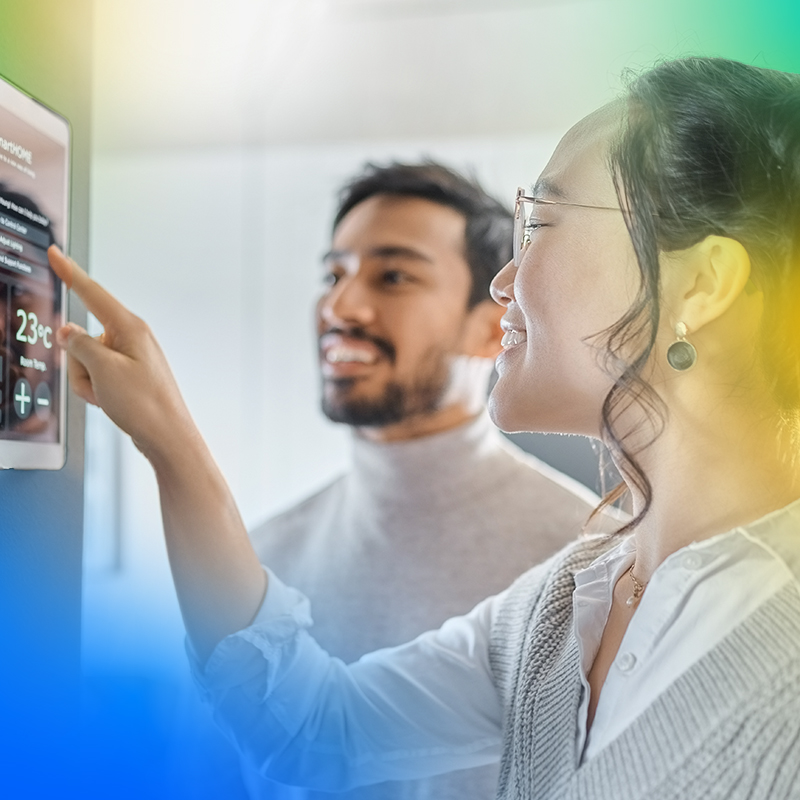
Traditionally, HVAC systems are programmed with standard setpoints: heating or cooling spaces during expected occupied hours, regardless of whether those spaces are fully utilized. Deploying Bluetooth® enabled sensing allows HVAC systems to become occupancy aware, leveraging real-time data to reduce heating or cooling in unoccupied spaces, adjust conditioning based on actual usage patterns, and effectively balance comfort and efficiency.
Even small temperature adjustments, such as reducing heating or cooling by one or two degrees in empty spaces, can lead to meaningful energy savings when applied across an entire building or portfolio.
Standardizing HVAC integration with Bluetooth NLC
The introduction of the Bluetooth® HVAC Integration NLC Profile marks a significant advancement in building automation. This specification standardizes how occupancy data from Bluetooth® Networked Lighting Control (NLC) systems is shared with HVAC systems, enabling seamless interoperability across devices from different vendors.
With this standardized approach:
- Thermostats can receive occupancy data from existing Bluetooth sensors
- Integration becomes simpler and more scalable
- Organizations can avoid vendor lock-in and proprietary solutions
Because many buildings already have large numbers of Bluetooth NLC sensors installed, this integration allows facility operators to unlock additional value from their existing infrastructure.
By creating a common foundation for communication between lighting and HVAC systems, Bluetooth® connectivity enables coordinated operation across a building’s major energy-consuming systems, supporting overall reduced energy consumption, lower peak energy demand, and improved alignment with sustainability goals.
As more vendors adopt these standardized profiles, the ecosystem continues to expand, driving innovation and increasing the accessibility of advanced, energy-efficient solutions.
Building-wide intelligence through a shared network
One of the most powerful aspects of Bluetooth® technology is its ability to unify multiple systems within a single wireless framework. A Bluetooth® NLC network, for example, that begins with lighting and occupancy sensing can evolve into a building-wide platform that supports lighting control, HVAC optimization, environmental monitoring, space utilization analytics, and future smart building applications.
This convergence eliminates the need for multiple overlapping networks and enables more efficient system design. For organizations, this means sustainability improvements are not isolated initiatives but part of a broader, integrated strategy.
Accelerating adoption through practical deployment
Sustainability solutions often face a common barrier: cost and complexity. Bluetooth helps address both. Because Bluetooth® NLC is a fully open, interoperable standard with a growing ecosystem of qualified products, organizations can deploy solutions incrementally, mix and match devices from different vendors, and scale systems over time without extensive redesign.
“Interoperability, vendor choice, and long-term flexibility are the core advantages of Bluetooth® Networked Lighting Control (NLC),” said Rafal Han, CEO of Silvair. “For building owners and facility managers, these are essential for implementing energy-efficient strategies at scale with confidence in their investment security. Unlike proprietary solutions that lock customers into specific ecosystems, Bluetooth® NLC fosters competition, leading to lower prices, faster innovation, and broader market adoption. The open-standard approach is not just shaping the future of lighting control, it makes sustainability more accessible across commercial buildings worldwide.”
Retrofit projects, in particular, benefit from the wireless nature of Bluetooth connectivity. By avoiding the need for additional wiring, installation becomes faster and more cost effective, making it easier to justify sustainability investments. And real-world deployments have already demonstrated significant results. For example, upgrading to Bluetooth® NLC systems can dramatically reduce energy consumption while improving occupant comfort, highlighting the tangible benefits of combining efficiency with intelligent control.
Interoperability, vendor choice, and long-term flexibility are the core advantages of Bluetooth® Networked Lighting Control (NLC). For building owners and facility managers, these are essential for implementing energy-efficient strategies at scale with confidence in their investment security.
Rafal Han, Silvair
Supporting long-term sustainability goals
The contribution to sustainability that Bluetooth® technology provides extends beyond immediate energy savings. By enabling continuous data collection and system optimization, Bluetooth connectivity supports long-term improvements that compound over time. Organizations leveraging Bluetooth enabled systems can track performance across facilities, identify new opportunities for efficiency gains, support compliance with sustainability standards and certifications, and reduce operational costs while lowering environmental impact.
As buildings become more responsive and data-driven, they are better equipped to adapt to changing regulatory requirements, energy pricing, and occupancy patterns. Bluetooth technology provides the foundation for this transformation by enabling real-time awareness of conditions, seamless communication between systems, and interoperable solutions that scale across diverse environments
With the introduction of standardized profiles, such as the Bluetooth® HVAC Integration NLC Profile, buildings are no longer limited to isolated systems. Instead, they can operate as cohesive, adaptive ecosystems. As adoption grows, this ecosystem will continue to expand, unlocking new use cases and business models that further advance sustainability goals.
Sustainability by default
Perhaps the most important contribution of Bluetooth® technology is not any single feature or application, but the ability to make sustainability the default mode of operation. When systems automatically adjust based on real conditions, when energy is used only when needed, and when decisions are informed by accurate data, sustainability becomes embedded in everyday processes. Bluetooth connectivity helps organizations achieve this without requiring constant manual intervention or trade-offs in performance.
In commercial spaces around the world, from offices and schools to industrial facilities and campuses, this shift is already underway. Lighting adapts to occupancy and daylight, HVAC systems respond to real usage patterns, and sensor networks provide continuous insight into how environments function. Together, these capabilities are helping organizations reduce energy consumption, extend the life of their assets, improve occupant well-being, and operate more responsibly.
A more sustainable future
As sustainability continues to rise in importance, the need for practical, scalable solutions will only grow. Bluetooth® technology is uniquely positioned to meet this need. Its combination of low power consumption, interoperability, scalability, and ease of deployment makes it an ideal platform for enabling smarter, more sustainable operations across commercial spaces.
By turning data into action and connectivity into efficiency, Bluetooth is helping create environments that are not only smarter but also more sustainable, supporting better outcomes for businesses, communities, and the planet as a whole.
Bluetooth®技術は過去数十年にわたり、ヘッドホンやスマートフォン、車載インフォテインメントの基盤技術として知られてきました。その役割は現在、コンシューマー市場で利便性を支えるという領域をはるかに超えて広がっています。Bluetoothは今や、商業・産業環境で基盤的となるワイヤレスプロトコルとして台頭しました。そして目立ちにくい形で、より持続可能な事業運営を支える新世代ソリューションを実現しています。
建物のエネルギー最適化に始まり、インフラ全体のインテリジェントな自動化に至るまで、Bluetooth接続は、システムが感知、応答、進化する方法を変えています。そうすることにより、Bluetooth接続は、持続可能性が「目標」から「日々の実践」へと移行するよう支援します。パフォーマンスや生産性を犠牲にする必要はありません。
商業オペレーション全体で持続可能性を向上
持続可能性は往々にして、「削減」の文脈で語られます。エネルギー消費の低減、排出量の低下、廃棄の最小化、といった具合です。しかし、持続可能性における有意義な成果は、システム動作の改善からも生まれます。効率性、応答性、そして長寿命化も、削減と同じくらい重要なのです。
施設、サプライチェーン、建築現場のいずれにおいても、システムが実際の状況をリアルタイムで感知し、利用パターンの変化に動的に適応し、長期的な意思決定の改善につながるデータを生み出すとき、サステナビリティは向上します。この3つすべてを実現できるのが、Bluetooth®技術です。
Bluetoothは、スケーラブルで相互運用性があり、低消費電力のワイヤレス基盤を提供します。それにより、さまざまな環境の間でセンサー、デバイス、システムをつなぎます。この接続性によって静的なオペレーションが動的で適応性のあるものへと変わり、資源は必要なときに必要な場所でのみ消費されるようになります。
Bluetooth接続は業務を遅くするものではなく、より高い精度と確信をもたらします。これにより、組織はパフォーマンスを維持または向上させながら無駄を削減できます。
リアルタイムの状況把握が生む、よりスマートなエネルギー利用
商業ビルにおけるエネルギーの無駄は、多くの場合、システムが実際の状況ではなく推測に基づいて動いていることに起因します。照明、暖房、冷房のシステムは、多くの場合、実際の利用状況を反映しない固定スケジュールや手動設定で稼働しがちです。この構図を変えるのが、Bluetooth®対応のセンシングです。
建物のシステムを在室データ、昼光レベル、環境条件と結びつけることで、Bluetooth接続により、施設はリアルタイムで応答できるようになります。システムは実際の利用状況に基づいて自動的に調整され、過剰照明、過剰空調、不要な稼働時間といった効率の悪さを解消します。固定スケジュールから応答型の運用へ移行することで、より持続可能な施設の実現に向けた決定的な一歩が踏み出せます。これにより、一般化された推測ではなく、実際の需要に沿ったエネルギー消費が可能になります。
照明は持続可能性の第一歩
照明は、商業ビルにおいて最も目に見えやすく、かつ往々にして非効率なエネルギー用途の一つです。従来の照明システムは、在室状況や昼光の有無にかかわらずフル出力で稼働することが多く、大量のエネルギーを無駄にしていました。米国の業界団体Lighting Controls Association(LCA)の2023年調査によると、従来型のシステムに代えてスマートなネットワーク照明制御を導入することで、商業ビルでは60%の省エネを達成できます。Bluetooth®ネットワーク照明制御(NLC)によって、照明は固定的で静的な設備から、エネルギー消費の削減に役立つインテリジェントで応答性の高いシステムに変わります。
Bluetooth® NLCのシステムは、実際の状況を取り入れながら照明を継続的に調整します。在室センサーと昼光センサーを組み込むことで、照明システムは、在室者がいない場合には減光または消灯し、自然光のレベルに応じて明るさを自動調整し、必要な場所に必要なタイミングで適切な照度を届けられるようになります。これらの機能は、安全性と快適性を保ちながら、不要なエネルギー消費を大幅に削減します。実際、スマートなネットワーク照明制御を導入することで、従来型システムと比べて大きな省エネ効果がもたらされます。
効率の向上は、エネルギー消費の削減のような即効性のある部分にとどまりません。稼働時間が短縮されることで、照明器具の長寿命化、保守頻度の削減が実現し、長期的には材料廃棄物の最小化につながります。
照明を超えたメリット
老朽化した照明からLED器具への置き換えは、エネルギー効率を高める手段として、すでに一般的になっています。これらの器具にBluetooth NLCのコンポーネントを組み込むことで、有線制御システムの設置コストや工事による稼働の中断なしに、高度な制御機能とセンシング機能を追加できます。
Bluetooth® NLCシステムは、追加配線なしに大規模な環境でデバイス間の通信を実現します。改修(レトロフィット)案件でとりわけ重要なのは、この点です。Bluetooth NLCは、建物やキャンパス全体にわたるスケーラブルな導入、数千台規模のデバイス間のシームレスな通信、そして時とともに変化するニーズに応じた柔軟な拡張をサポートします。さらに導入の容易さによって、サステナビリティ関連の設備の改善がより身近に、かつ費用対効果も高まることから、商業空間全体での採用が加速しています。
いったん導入されれば、これらのシステムは照明インフラを超え、建物全体をカバーする高密度なセンサーネットワークとして機能します。最新の照明器具は、在室検知、環境光測定、温度、湿度、二酸化炭素(CO₂)濃度、騒音レベルなど、幅広いセンサーを搭載できます。これらのセンサーによって豊富な環境データが継続的に得られ、データは照明以外のシステムの最適化にも活用できます。事実上、照明はより広範なビルインテリジェンス基盤の中核となり、継続的な効率改善への取り組みを支えます。
データに基づくインサイトを継続的な改善に活用
Bluetooth® NLCのシステムによって、持続可能性への取り組みを継続的に支える、価値あるデータが得られます。たとえば在室センサーから分析プラットフォームへ送られるデータによって、在室状況のヒートマップで空間利用を可視化できます。施設管理者は、1日、1週間、1カ月を通じて各エリアがどう使われているかを把握し、より根拠に基づく意思決定を下せます。
こうしたインサイトは、スペース利用の最適化、稼働スケジュールの調整、低稼働率エリアや空調が過剰なエリアの削減だけでなく、将来的な建物設計や改修計画の資料として活用できます。このレベルでの可視性は、オフィスビル、大学、商業キャンパスといった大規模な環境で非効率性を削減する上で非常に重要です。
サステナビリティのメリットをHVACシステムにも拡大
照明はエネルギー消費の大きな要因ですが、暖房・換気・空調(HVAC)システムは通常、それをさらに上回るエネルギーを消費します。しかも照明と同様、多くのHVACシステムは実際の在室状況を反映することなく、固定スケジュールで稼働しています。ここに大きな改善の余地があります。
従来、HVACシステムは標準的な設定値でプログラムされ、その空間が実際にすべて使われているかどうかにかかわらず、想定される在室時間帯に暖房や冷房を行ってきました。Bluetooth®対応のセンシングを導入することで、HVACシステムは在室状況を認識できるようになります。リアルタイムデータを活用して、空室の場合には暖房・冷房を抑え、実際の利用パターンに応じて空調を調整することで、快適性と効率のバランスを適切に保てます。
例えば、空室の暖房や冷房を1~2度抑えるといったわずかな調整でも、建物や保有物件全体に適用すれば、省エネ効果は大きなものになります。
Bluetooth NLCによるHVAC統合の標準化
Bluetooth® HVAC Integration NLC Profile(HVAC統合NLCプロファイル)の登場は、ビルオートメーションにおける大きな前進です。この仕様は、Bluetooth®ネットワーク照明制御(NLC)システムがHVACシステムと在室データを共有する方法を標準化しています。その結果、異なるベンダーのデバイス間で、シームレスな相互運用性が実現します。
この標準化アプローチは下記のメリットをもたらします。
- 既存のBluetoothセンサーからサーモスタットに在室データを提供
- よりシンプルかつスケーラブルな統合
- ベンダーや独自仕様ソリューションへのロックインを回避
多くの建物では、すでに数多くのBluetooth NLCセンサーが設置されています。そのためこの統合によって、施設運営者は既存インフラからさらなる価値を引き出せるようになります。
照明システムとHVACシステム間の共通の通信基盤をつくることで、Bluetooth®接続により、建物の主要なエネルギー消費システム全体が連携して稼働できるようになり、総エネルギー消費の削減、ピーク電力需要の低減、そしてサステナビリティ目標との整合性向上を支えます。
より多くのベンダーがこれらの標準化されたプロファイルを採用するにつれ、エコシステムの継続的な拡大とイノベーションが促進されます。それとともに、先進的でエネルギー効率に優れたソリューションが、より手の届きやすいものになります。
共有ネットワークで建物全体のインテリジェンス化を実現
Bluetooth®技術の最も強力な特長の一つは、複数のシステムを単一のワイヤレスフレームワークに統合できることです。たとえば、照明と在室検知から始まったBluetooth® NLCネットワークは、照明制御、HVAC最適化、環境モニタリング、スペース利用分析、そして将来のスマートビル向けアプリケーションを支える、建物全体のプラットフォームへと発展できます。
この融合により、重複する複数のネットワークが不要になり、より効率的なシステム設計が可能になります。これは組織にとって、持続可能性の向上が孤立した施策ではなく、より広い統合的な戦略の一部になることを意味しています。
実践的導入で採用を加速
サステナビリティ関連のソリューションは、コストと複雑さという共通の障壁に直面しがちです。Bluetoothはその両方の課題解決に応えます。Bluetooth® NLCは完全にオープンで相互運用可能な標準であり、認証済み製品のエコシステムも拡大を続けています。そのため組織は、ソリューションを段階的に導入し、異なるベンダーのデバイスを自由に組み合わせ、大幅な再設計を必要とすることなく、時間をかけながらシステムを拡張できます。
SilvairのCEOであるRafal Han氏は次のように述べています。「相互運用性、ベンダー選択の自由、そして長期的な柔軟性こそが、Bluetooth®ネットワーク照明制御(NLC)が持つ強みの中核を成しています。ビルオーナーや施設管理者にとって、これらは投資の安全性に確信を持ちながら省エネ戦略を大規模に実行する上で不可欠です。顧客を特定のエコシステムに囲い込む独自仕様のソリューションとは異なり、Bluetooth® NLCは競争を促し、価格の低下、イノベーションの加速、市場採用の拡大をもたらします。オープンスタンダードというアプローチは、照明制御の未来を形づくるだけでなく、世界中の商業ビルで持続可能性をより身近なものにしています。」
とりわけ改修案件では、Bluetooth接続がワイヤレスであることの大きな恩恵が得られます。追加配線が不要になることで、施工はより速く、より費用対効果の高いものとなり、サステナビリティ投資の妥当性を説明しやすくなります。実際の導入事例でも、すでに顕著な成果が示されています。たとえばBluetooth® NLCシステムへのアップグレードは、在室者の快適性を高めながらエネルギー消費を劇的に削減でき、効率性とインテリジェントな制御の組み合わせがもたらす具体的なメリットを浮き彫りにしています。
長期的な持続可能性目標をサポート
Bluetooth®技術が持続可能性にもたらす貢献は、即時的な省エネ効果にとどまりません。継続的なデータ収集とシステムの最適化を可能にすることで、Bluetooth接続は時間とともに蓄積される長期的な改善を支えます。Bluetooth対応システムを活用する組織は、パフォーマンスを複数施設にわたって追跡し、効率向上の新たな機会を特定するとともに、持続可能性に関する基準や認証への適合を後押しし、環境負荷を下げながら運用コストも削減できます。
建物の応答性が高まりデータドリブンになるほど、規制要件の変化、エネルギー価格、在室パターンへの適応力も高まります。Bluetooth技術は、リアルタイムな状況把握、シームレスなシステム間通信、そして多様な環境に合わせて規模を拡大できる相互運用可能なソリューションを実現し、変革するための基盤を提供します。
Bluetooth® HVAC Integration NLC Profileのような標準化されたプロファイルの登場により、建物はもはや孤立したシステムの集合体にとどまらず、一体的で適応力のあるエコシステムとして機能できます。採用が広がるにつれ、このエコシステムはさらに拡大し、持続可能性目標をいっそう前進させる新たなユースケースやビジネスモデルを切り開いていきます。
持続可能性をデフォルトに
おそらく、Bluetooth®技術による貢献の最も重要な点は、個別の機能やアプリケーションにあるのではなく、持続可能性を「運用の初期設定(デフォルト)」にできることにあります。システムが実際の状況に応じて自動的に調整される場合、エネルギーが必要なときにだけ使われる場合、そして正確なデータの裏づけによって意思決定される場合に、サステナビリティは日常のプロセスの一部となります。Bluetooth接続は、この実現を支援します。手動による常時介入も、パフォーマンスにおける妥協も必要ありません。
オフィスや学校から産業施設、キャンパスまで、世界中の商業空間でこの移行はすでに始まっています。照明は在室状況と昼光に適応し、HVACシステムは実際の利用パターンに応答して、センサーネットワークは環境がどう機能しているかについて継続的なインサイトを提供します。これらの機能が組み合わさることで、組織はエネルギー消費の削減、資産の長寿命化、在室者のウェルビーイング向上と、より責任ある運用を実現しています。
より持続可能な未来へ
持続可能性の重要性が高まり続けるなか、実践的でスケーラブルなソリューションへの需要も拡大を続けるでしょう。Bluetooth®技術は、この需要に応える上で比類のない位置を占めています。低消費電力、相互運用性、拡張性、そして導入の容易さを兼ね備えていることで、商業空間全体にわたり、よりスマートで持続可能なオペレーションを実現する理想的なプラットフォームとなっています。
データから行動を、接続性から効率性を生み出すことで、Bluetoothはよりスマートであると同時により持続可能な環境の創出を後押ししています。そして、企業、地域社会、さらには地球全体にとって、より良い成果を支えています。
