According to the World Health Organization (WHO), more than 2.5 billion people need one or more assistive products that can maintain or improve an individual’s functioning and independence. By 2050, this is anticipated to rise to 3.5 billion.
Making the world more accessible through the availability of new assistive technologies and products is fundamental to bringing life-changing benefits for individuals faced with accessibility challenges.
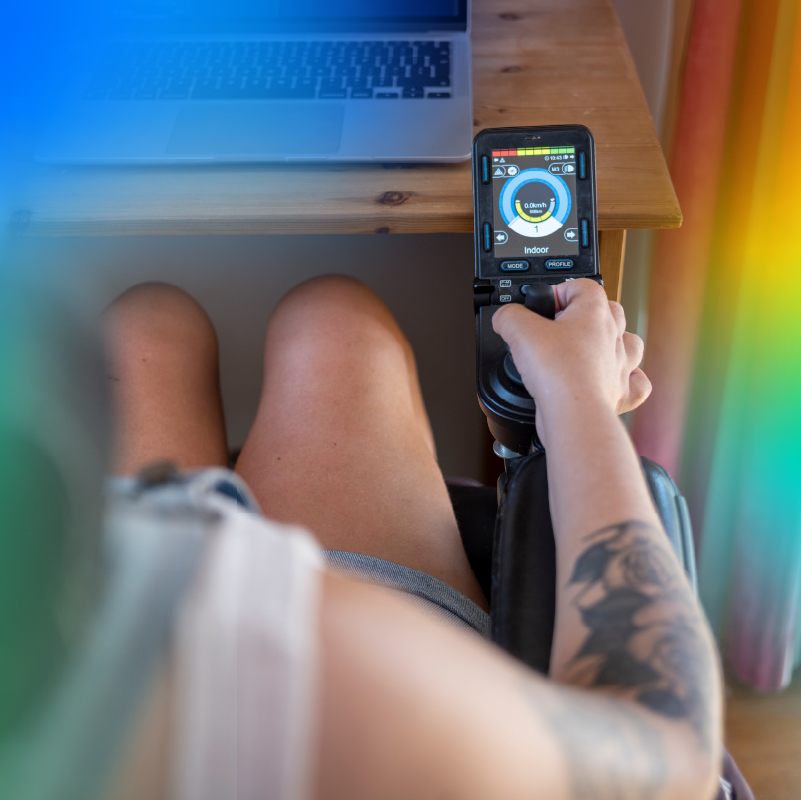
Enhancing accessibility with Bluetooth® technology
Thanks to its diverse member ecosystem, ubiquitous presence in mobile and computing devices, low power consumption, audio capabilities, dedicated accessibility features, and continued technological innovation, Bluetooth® technology is uniquely capable of enabling an extensive range of assistive products, facilitating greater visual, mobility, speech, and hearing accessibility around the world.
Recently, with help from ABI Research, the Bluetooth Special Interest Group (SIG) released a new market research note, When connection becomes inclusion: How Bluetooth is redefining accessibility, that looks at how Bluetooth technology is supporting people with varying accessibility needs to enable a more inclusive world. This paper explains how Bluetooth technology is being leveraged in an increasingly diverse range of assistive solutions that enable users to live more independently, participate more confidently, and have greater opportunities in their day-to-day lives.
Many Bluetooth technology characteristics — from low power consumption and dedicated features to continued innovation and a diverse ecosystem — make it the ideal solution for supporting assistive products.
Low power consumption
Many assistive products, such as hearing aids, wearables, skin-worn sensors, smart glasses, and smart mouth wear come in extremely small form factors with limited battery sizes. As a result, the ultra-low power benefits of Bluetooth® technology uniquely position it to enable hours, days, or months of operation depending on the specific use case. This enables users to use their products for longer while enabling greater flexibility through wireless operation.
Ubiquitous presence
Many of these assistive products require connectivity to PCs, mobile phones, or tablets to enable a variety of functions, including data transfer, firmware updates, remote configuration, diagnostics, remote control, and activity tracking, among others. Bluetooth® technology’s ubiquitous presence in these devices means it is uniquely positioned to enable these solutions.
In-ear guidance and discreet assistance

Many visual accessibility solutions require voice readouts to provide directions, descriptions of surroundings, or other information. Thanks to the wide availability of Bluetooth® audio solutions, users can receive more discreet, in-ear guidance directly to their headphones or hearing aids.
Dedicated accessibility features
Dedicated accessibility features and standards, such as Auracast™ broadcast audio, are uniquely positioned to solve the specific accessibility challenges of today, opening the potential for more public venues to leverage assistive listening technology and a much wider expansion of hearing accessibility for both personal and public usage scenarios.
Continued technology innovation
Bluetooth® technology continues to evolve and add new features and capabilities, many of which will benefit the future development of assistive products. For example, work is ongoing to bring several further enhancements to Auracast™ broadcast audio, such as defining a standardized approach when using multiple Auracast™ transmitters in larger environments, support for more streams to support multi-language broadcasts, and a standardized approach to discovering Auracast™ broadcasts on constrained receiver devices, such as hearing aids, without the need for a smartphone.
Similarly, reductions in latency through the ultra-low latency (ULL) human-interface-device (HID) enhancement project aims to make Bluetooth controllers as responsive as those using USB-wired or proprietary wireless communications. This could prove beneficial to many assistive HID and control devices.
Diverse member ecosystem
The competitive and ever-growing ecosystem of Bluetooth® IC vendors and other solution providers continue to drive improvements on other key metrics, such as power consumption, robustness, size, and range, providing enhanced flexibility and convenience for users of assistive products. These solutions enable a growing number of manufacturers to create new assistive products and bring innovative experiences to users faced with a wide range of accessibility challenges.
Creating a more accessible world
With accessibility challenges expected to impact more people over the next few decades, the range of assistive products will become even more diverse, and a combination of growing demand, technology innovation, new product types and form factors, regulatory incentives, and greater familiarity will all drive the market forward.
Product manufacturers should investigate the role that Bluetooth® technology can play in enabling next-generation assistive products and experiences as the market opportunities grow in the years to come. Meanwhile, the Bluetooth SIG is committed to creating a better world through the enhancement and greater availability of assistive solutions enabled by Bluetooth technology.
To learn more, download the latest market research: When connection becomes inclusion: How Bluetooth is redefining accessibility.
And check real-world examples to see how Bluetooth technology is being used to help create a more accessible world.
世界保健機関(WHO)によると、現在、25億人を超える人々が、自立や生活機能の維持・向上をサポートする支援デバイスを必要としています。この数は2050年には35億人に達すると考えられています。
アクセシビリティに課題を抱える人々の生活を大きく改善するには、新しい支援技術および製品を通じて、よりアクセスしやすい世界を実現することが不可欠です。
Bluetooth®技術によるアクセシビリティの向上
Bluetooth®技術は、さまざまなメンバー企業による強固なエコシステムを背景に、スマートフォンやパソコンの大半に搭載され、世界中に普及しています。この技術が持つ、低消費電力、音声機能、アクセシビリティに特化した機能など継続的なイノベーションをベースに、さまざまな支援製品が生み出され、世界規模で視覚や移動、発話、聴覚などに関するアクセシビリティの向上を実現しています。
先日Bluetooth SIG(Special Interest Group)は、ABI Researchとの協力のもと、新しい市場調査レポート「つながりで実現する、誰もが参加できる社会――Bluetoothが変革するアクセシビリティの未来」を公開しました。このレポートでは、すべての人にとって暮らしやすい世界を実現するために、Bluetooth®技術がアクセシビリティに関するさまざまなニーズを支援している方法をまとめています。そしてBluetooth技術がさらに多様さを増す支援ソリューションでどのように活用されているを解説し、それによって利用者が自立性を高め、より自信を持って社会に参加し、日常生活における可能性を広げている様子を紹介しています。
低消費電力から専用機能、絶え間ない技術革新、広範なエコシステムなどのさまざまな特性によって、Bluetooth技術は支援デバイスにとって理想的なソリューションとなっています。
低消費電力
支援デバイスは小型なものが多く、特に補聴器、ウェアラブル、皮膚装着センサー、スマートグラス、スマートマウスウェアなどは非常に小型で、バッテリーのサイズにも制約があります。このためBluetooth®技術の極めて低消費電力であるという特性が、非常に大きなメリットをもたらします。特定の用途では、数時間、数日、あるいは数カ月もの長時間動作が可能となります。さらにユーザーが製品をより長時間使用できるだけでなく、ワイヤレスでより柔軟な操作までもを実現します。
圧倒的な普及度
支援デバイスでは多くの機能で、パソコンやスマートフォン、タブレットとの接続を必要とします。たとえばデータの転送やファームウェアの更新、リモート設定、診断、遠隔操作、活動のトラッキングなどです。Bluetooth®技術は極めて広範に普及しており、こういった機能を実現する上で他と一線を画す強みがあります。
情報が耳に直接届く、さりげない支援機能
視覚アクセシビリティ向けソリューションの多くは、方向案内や周囲の状況などの情報提供に、音声による読み上げを必要とします。Bluetooth®オーディオソリューションは一般に広く普及しているため、イヤホンや補聴器の装着が目立ちにくく、直接耳に音声案内を届けることが可能です。
アクセシビリティ専用機能
Auracast™ブロードキャストオーディオなど、アクセシビリティに特化した機能や標準規格は、今日的なアクセシビリティの課題を解決するための独自の位置を占めています。より多くの公共の場で、聴覚支援技術を活用する可能性を開き、個人向け・公共向けの聴覚アクセシビリティに関する優れた解決策を提供します。
絶え間ない技術革新
Bluetooth®技術は進化を続けており、新たな機能が次々と追加されています。こうした機能もまた、将来の支援デバイスの開発に大きく貢献すると期待されています。Auracast™ブロードキャストオーディオも、さらなる機能強化が進んでいます。たとえば、大規模環境で複数台のAuracast™送信機を使用する場合における標準化の手法策定、複数言語のブロードキャストに対応するためのストリーム数の追加、スマートフォンを使わずに補聴器など制約のある受信機でAuracast™ブロードキャストを検出する標準化の手法整備などが進行中です。
また、超低遅延(ULL)のHID(ヒューマン インターフェース デバイス)強化プロジェクトも進んでいます。これにより、Bluetooth®コントローラーの遅延を低減し、その応答性をUSB接続や独自の無線通信を使用したコントローラーと同等レベルにすることを目指しています。この実現により、さまざまなHIDやコントロールデバイスにメリットがもたらされます。
多種多彩なメンバー企業からなるエコシステム
Bluetooth®のエコシステムは、Bluetooth® ICベンダーやソリューションプロバイダーが参加し、切磋琢磨することで拡大を続けています。消費電力や堅牢性、サイズ、通信範囲といった重要な要素が日々改善され、支援デバイスユーザーのための柔軟性や利便性の面でも進化を続けています。このようなソリューションをもとに、多数のメーカーが新たな支援デバイスを生み出し、さまざまなアクセシビリティの課題を抱える方々に、かつてない体験を届けられるようになっています。
よりアクセシブルな世界の実現に向けて
今後数十年で、今以上に多くの方がアクセシビリティの課題を抱えるとされています。一方、この課題に応える新製品が日々生まれ、製品の種類もさらに広がっていきます。需要の高まりや技術の進歩、新製品の種類や形状の多様化、法規制による後押し、そして人々の理解などさまざまな要因が重なり合い、市場は拡大していくでしょう。
市場の成長が見込まれるこれからの時代、メーカーはBluetooth®技術が次世代の製品や体験づくりにどう役立つかを積極的に考えていく必要があります。それとともにBluetooth SIGでは、Bluetooth®技術を活用した支援ソリューションをさらに進化させ、普及させることで、より良い世界の実現に向けた取り組みを続けていきます。
詳しくは、最新の市場調査レポート「つながりで実現する、誰もが参加できる社会――Bluetoothが変革するアクセシビリティの未来」をダウンロードしてください。
また、Bluetooth技術がよりアクセシブルな世界を実現するためにどのように活用されているかを見ることのできる、実際の導入事例もご覧ください。
