Bluetooth is more than a technology; it is a community of some of the world’s best minds and organizations with the shared vision of creating a better world through connection. Thousands of members worldwide come together to bring bold new ideas to life — whether that’s optimizing industrial operations, supporting greater inclusion for those faced with accessibility challenges, creating more intuitive health and wellness solutions, reducing costs in commercial spaces, driving automotive advancements, and more.
Companies like Ampetronic and Listen Technologies, GN, Infineon Technologies, Nordic Semiconductor, OpenSynergy, Silicon Labs, Silvair, and others are powering a new generation of Bluetooth® devices that are pushing the boundaries of what’s possible.
Optimizing industrial operations

From an individual perspective, it is easy to see Bluetooth as largely a consumer technology. So many of our personal wireless devices, from smartphones to smartwatches to smart appliances and more, use Bluetooth® connectivity to make our lives easier and everyday tasks seamless. However, the scope of solutions that rely on Bluetooth technology expands well beyond consumer applications into commercial and industrial use cases.
Bluetooth® Channel Sounding is a new secure, fine-ranging feature that will enhance the convenience, safety, and security of Bluetooth connected devices. Advancements in Bluetooth® Channel Sounding alone have garnered widespread interest this year across commercial and industrial applications.
According to Parker Dorris, staff product manager at Silicon Labs, they are beginning to see how Bluetooth® Location Services are driving new levels of productivity in industrial applications. Bluetooth® Channel Sounding, specifically, will help unlock greater precision and reliability in a small form factor, opening entirely new use cases. “The latest wave of innovation is being powered by Bluetooth® Channel Sounding, which enables highly precise location capabilities,” said Dorris. “By improving the ability to track assets, equipment, and personnel, Bluetooth is helping make industrial environments not only more efficient but also safer for workers.”
Øyvind Strøm, EVP of the short-range business unit at Nordic Semiconductor, noted that they have been able to push new boundaries with Bluetooth® Channel Sounding, laying the groundwork for accurate distance measurement that is redefining asset tracking and item finding, as well as interfaces for a wide range of applications and machines.
“Industrial innovation is entering a new phase of intelligence and precision, and Bluetooth is right at the center of it,” said Strøm. “Bluetooth® Channel Sounding unlocks more accurate indoor positioning, which will improve safety and logistics in hospitals and industrial environments. By enabling sub-meter asset tracking, Bluetooth® Channel Sounding supports improved worker safety through geofencing and safety zone functionalities.”
Bluetooth® human-machine interface (HMI) solutions, powered by Bluetooth® Channel Sounding, can enhance personnel safety by only allowing usage from a safe distance, and Bluetooth device networks, such as those used for wireless lighting control, can self-optimize to enhance overall system performance.
Shantanu Bhalerao, VP of the wireless products at Infineon Technologies, says that wire replacement, the original use case common in consumer audio, is gaining widespread interest across a range of industrial use cases. “Benefits like asset tracking, direction finding, and ease of device onboarding can have a big impact in the automotive and industrial space,” said Bhalerao. “These impacts directly contribute to simplifying existing architectures or increasing automation efficiency.”
Learn more about use cases and experiences Bluetooth® Channel Sounding supports.
By improving the ability to track assets, equipment, and personnel, Bluetooth is helping make industrial environments not only more efficient but also safer for workers
Parker Dorris, Silicon Labs
Creating intuitive health and wellness solutions
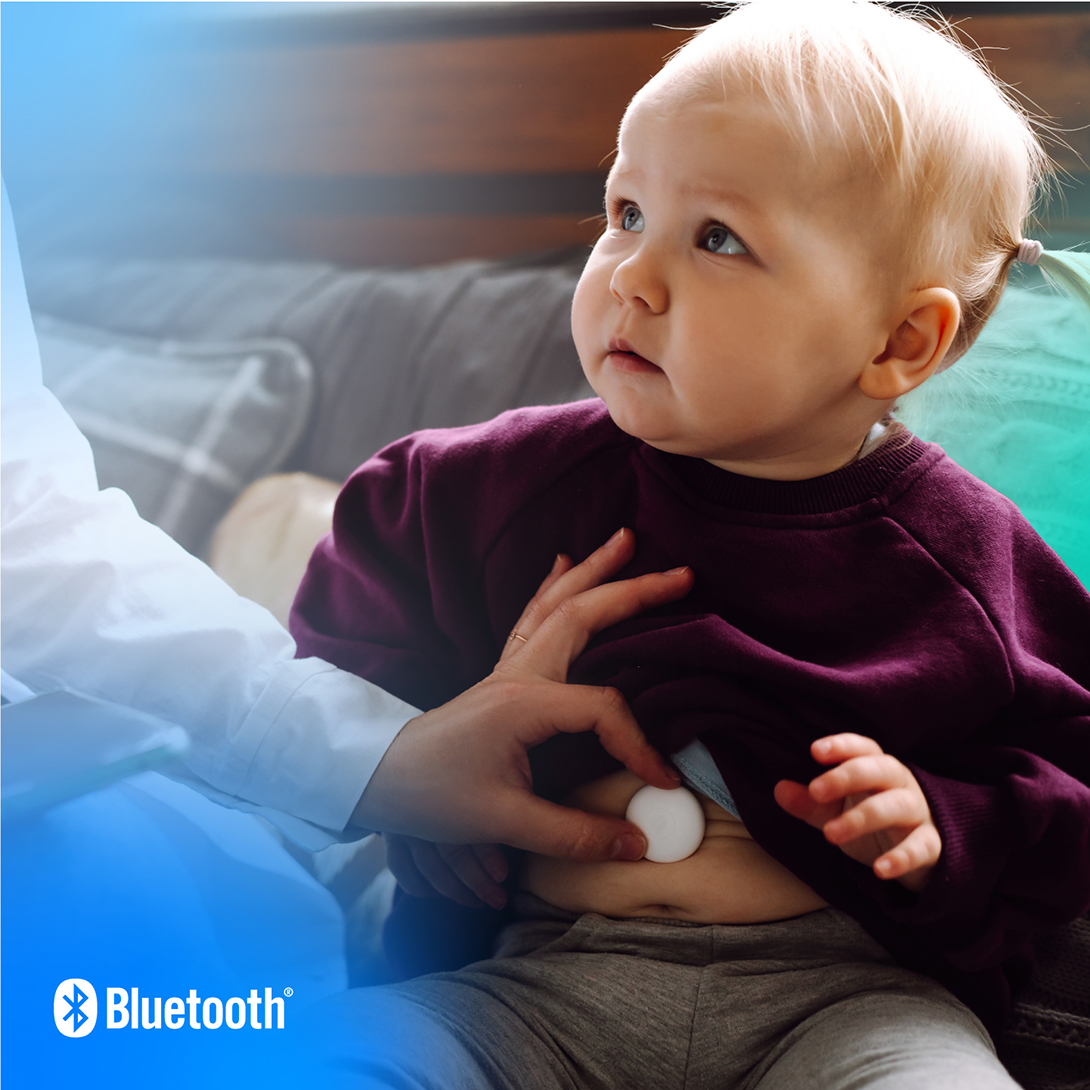
With the rapid evolution of Bluetooth® wearables, a massive ecosystem of health and wellness solutions has sprung up over the last decade. Today’s health and wellness devices are as much about safety and medical insight as they are about activity. Many devices now carry regulatory clearance for detecting cardiac irregularities or measuring oxygen levels. Others integrate with telehealth platforms and hospital systems, turning individual devices into parts of larger care networks.
“Health-monitoring Bluetooth® devices like fitness trackers, smartwatches, and smart rings are enabling healthier lifestyles and making an important move from curative to preventive healthcare,” said Øyvind Strøm from Nordic Semiconductor.
As care delivery moves beyond hospitals and into homes, wearable technologies are filling the gap between patient and provider. Bluetooth® technology’s proven performance and global standardization make it a natural choice for this new model of connected health. As such, manufacturers are designing devices that merge consumer appeal with clinical precision, with Bluetooth connectivity serving as the invisible bridge linking user, data, and caregiver.
Around the globe, Bluetooth® technology is being used to help create a healthier world, enabling life-changing medical innovations, such as insulin pumps and continuous glucose monitors, that improve health outcomes and quality of life. “Our Bluetooth enabled solutions power popular smart rings, smart stethoscopes, and smart patches (for migraines),” said Shantanu Bhalerao from Infineon Technologies. “We’re really proud to be able to help our customers deliver impactful products that help millions of people better maintain their personal health and wellbeing.”
Learn more about how Bluetooth is helping to create a healthier world.
Enhancing greater accessibility and engagement
The Bluetooth community is committed to removing barriers and enriching lives through greater independence, participation, and belonging, assisting people of all abilities to move more freely and engage more confidently. From enabling smart wheelchairs and fall-detection wearables to screen readers and smart glasses, Bluetooth® accessibility solutions are empowering individuals with visual, mobility, speech, and hearing accessibility challenges to better navigate everyday life.
Nowhere has this been more recently apparent than in the momentum with which Auracast™ broadcast audio is being adopted as a solution for improving assistive listening, especially in public venues.
According to Kim Franklin, Ampetronic and Listen Technologies CMO, there’s been a significant shift to broader accessibility and engagement. Venues are using Auracast™ broadcast audio for multilingual streaming, silent TV zones, and informational tracks, demonstrating that Auracast™ innovation is driving better listening experiences for a wide range of visitors. “The biggest opportunity for Auracast™ broadcast audio is societal, normalizing accessible audio everywhere,” said Franklin. “What excites me the most is watching the shift from assistive listening being seen as for some, to simply being better audio for all.”
We are helping our customers create products that enable public venues to broadcast audio to multiple devices, making shared experiences, from museum tours to fitness classes, more accessible to people with hearing challenges. These innovations reflect our commitment to using Bluetooth® connectivity to enhance health, inclusion, and human connection.
Øyvind Strøm, Nordic Semiconductor
Øyvind Strøm, from Nordic Semiconductor, says that Auracast™ broadcast audio is empowering public venues to offer shared audio experiences that are accessible to everyone, including those with hearing loss. “We are helping our customers create products that enable public venues to broadcast audio to multiple devices, making shared experiences, from museum tours to fitness classes, more accessible to people with hearing challenges. These innovations reflect our commitment to using Bluetooth® connectivity to enhance health, inclusion, and human connection,” said Strøm.

Thomas Olsgaard, principal engineer at GN, says that he has seen the adoption of Auracast™ broadcast audio across diverse venues — from cultural institutions to transport hubs to other community spaces — as a new benchmark for accessibility, and its expansion is improving the day-to-day lives of people with hearing loss. “It’s crucial that the hearing loss community is aware of Auracast™ broadcast audio’s availability, its rollout in venues, and, most importantly, its transformative potential to their listening experiences,” said Olsgaard.
According to Chuck Sabin, VP of technology and market development at the Bluetooth SIG, Auracast™ broadcast audio has injected new excitement and momentum across the audio and assistive listening ecosystem, enabling distributors and installers to think bigger and broader about the solutions they are providing. “Auracast™ broadcast audio is the best thing that has happened for assistive listening and audio accessibility in a long time,” said Sabin. “While some locations may still decide to install Auracast™ alternatives, or just update current systems, there is no question the impact Auracast™ broadcast audio is having on the ecosystem and raising awareness for assistive listening, in general.”
Learn more about how Bluetooth is helping to create a more accessible world.
Reducing costs in commercial spaces
The only full-stack standard for wireless lighting, Bluetooth® Networked Lighting Control (NLC) offers standardization from the radio through the device layer, enabling true multi-vendor interoperability and mass adoption of wireless lighting control. Early on, Bluetooth NLC established itself as the leading wireless standard for lighting control and sensing in commercial and industrial environments.
This year, the Bluetooth SIG released the Bluetooth® HVAC Integration NLC Profile, which supports direct integration with HVAC systems and marks a significant advancement in building automation. This enhancement enables smarter, more energy-efficient systems by allowing lighting and HVAC components to communicate seamlessly over a standardized wireless framework.

According to Chris Wolgamott CEM, CDSM, principal product manager, technology and product management, at the Northwest Energy Efficiency Alliance (NEEA), the Bluetooth® HVAC Integration NLC Profile can significantly advance goals related to sustainability, smart buildings, and grid interaction by creating a standard foundation for system interoperability. With the introduction of the Bluetooth HVAC Integration NLC Profile, a lighting control system based on Bluetooth® Networked Lighting Control can extend beyond lighting, enabling the creation of a robust, building-wide Bluetooth® Mesh Network and allowing a new level of intelligent automation and coordination between a building’s energy-consuming systems.
Wolgamott says that as more vendors adopt the Bluetooth® HVAC Integration NLC Profile, the foundational opportunities for cost reduction and interoperability will enable a host of more advanced innovations and business models. The emergence of a robust, standards-based ecosystem could lead to a deeper integration of smart technologies, allowing buildings to evolve from simple automation to genuinely intelligent, adaptive environments.
Szymon Slupik, CTO & co-founder at Silvair, says that the Bluetooth HVAC Integration NLC Profile will standardize how occupancy data from NLC systems interfaces with HVAC systems. “With the rapidly growing number of Bluetooth NLC occupancy sensors installed in buildings, standardizing this data exchange increases functionality and adds overall value to the system through the network effect,” said Slupik. “The Bluetooth HVAC Integration NLC Profile gives the thermostat vendors a prescriptive guide on how to enable thermostats to receive occupancy data from sensors that have already been installed in high numbers. Even in buildings without a Bluetooth NLC solution, standalone mesh-enabled occupancy sensors can now be deployed and associated with compatible HVAC thermostats.”
Slupik goes on to note that the benefits for building owners, facility managers, and tenants are instant. Unoccupied spaces may be configured with small temperature setbacks, even one or two degrees, nothing that would compromise the comfort of occupants. But these small setbacks will result in significant additional energy savings (even a low percentage of savings translates into big numbers).
Learn more about how Bluetooth is helping to optimize commercial spaces.
Driving automotive advancements
One of the early industries to embrace Bluetooth® connectivity (hands-free audio), manufacturers across the automotive sector continue to create new ways to use Bluetooth® technology to enhance the driving experience. With many potential wire-replacement applications emerging in the automotive market, a number of industry leaders are actively investing in research and development to help further the benefits Bluetooth technology can provide.
According to David Baum, product director for wireless technologies at OpenSynergy, consumers demand continuous connectivity, smooth smartphone integration, and access to their personalized content as a natural interaction with their vehicles. “In response to this demand, vehicle OEMs are looking to add support for more and more connected devices within the vehicle, requiring architectures with more than one Bluetooth controller to add additional throughput,” said Baum. “The opportunity now is to provide OEMs and Tier1s a simple yet powerful interface to the application layer, allowing efficient and transparent routing of streams between different controllers so that applications can work harmoniously together.”
Shantanu Bhalerao, from Infineon Technologies, says that they have been leveraging Bluetooth technology to help innovate wireless battery management systems to replace the traditional cables that transmit critical battery information. “We’re developing a platform where Bluetooth is the key enabling technology for many automotive features like wireless battery management systems (BMS), car access, in-car infotainment, and other wire replacement opportunities,” said Bhalerao. “Our goal is to significantly lower manufacturing time and complexity, meaning battery assemblies will become more efficient and reduce e-waste.”
We’re developing a platform where Bluetooth is the key enabling technology for many automotive features…Our goal is to significantly lower manufacturing time and complexity, meaning battery assemblies will become more efficient and reduce e-waste.
Shantanu Bhalerao, Infineon Technologies
While Bluetooth systems have been essential features throughout the automotive market, enabling greater mobility and providing expected convenience, new Bluetooth automotive applications are supported by Bluetooth® Channel Sounding. Using Bluetooth® Channel Sounding, developers can enhance the security and user experience of digital key solutions, ensuring a lock only opens when the authorized device is within a certain distance. This significantly reduces the risk of unauthorized access from man-in-the-middle (MITM) relay attacks.
“Bluetooth® technology stands apart because of its remarkable versatility, spanning residential, commercial, industrial, automotive, and even non-terrestrial applications,” said Parker Dorris, from Silicon Labs. “Its durability and ubiquity make it one of the most impactful wireless technologies, and, fortunately, its impact continues to be profoundly positive for people and the planet. Bluetooth is a key part of shaping a future where technology feels natural, accessible, and efficient.”
Learn more about how Bluetooth is advancing automotive innovation.
Connections that create a better world
Of course, this article only covers a narrow scope of the use cases and applications that Bluetooth® technology supports. Most personal wireless devices rely on Bluetooth connectivity, so much so that we often take it for granted and tend to forget the important role Bluetooth plays in our lives.
For years now, Bluetooth technology has expanded beyond consumer products and supports an incredible breadth of commercial and industrial solutions. However it evolves in the years to come, Bluetooth connectivity will continue to be an essential part in creating a better world — a world that is healthier, smarter, more efficient, and more sustainable, where connection enriches lives, enhances experiences, opens new opportunities, and transforms industries by changing the way business is done.
“We also see Bluetooth supporting sustainability, with energy-harvesting technologies that power battery-less sensors, reducing waste one battery at a time,” said Dorris. “Bluetooth continues to inspire innovation that strengthens connections between people, communities, and the planet.”
Learn more about how Bluetooth is fostering connections fundamental for people, business, and the world to flourish.
