Bluetooth® technology is transforming patient care by enabling safer, cleaner, more efficient healthcare facilities, as well as creating healthier and more comfortable spaces thanks to the deployment of wireless sensors, networked lighting control, and wider human-centered building design incentives.
Earlier this month, the Bluetooth Special Interest Group (SIG), with help from ABI Research, released new market research that looks at how Bluetooth® technology is playing a critical role in improving health and well-being by creating healthier spaces.
The following is an excerpt from that report, Wireless well-being: How Bluetooth® technology is at the heart of healthcare transformation.
Creating healthier spaces

Bluetooth® technology helps create spaces that foster better health and improve the well-being of individuals and communities alike. By improving air quality, optimizing energy use, and ensuring health and safety compliance, Bluetooth® technology helps enable spaces to provide cleaner, more comfortable environments that foster better health and wellness.
Air-quality monitoring
Bluetooth® sensors are widely deployed in smart buildings and urban spaces to monitor air quality in real time. These sensors track pollutants, allergens, CO2 levels, temperature, humidity, vape fumes, and ambient noise across a wide range of environments, providing essential data to help building managers optimize building systems. Some of these are battery powered, enabling up to five years of battery life and can seamlessly connect to their Bluetooth® enabled access points and gateways. By ensuring indoor air quality meets health standards, Bluetooth® technology helps reduce the risk of respiratory
Human-centered building design
Bluetooth® technology helps optimize energy usage in buildings, which not only benefits the environment but also enhances the comfort of visitors and occupants. Bluetooth® sensors regulate heating, cooling, and lighting systems based on occupancy and environmental conditions, ensuring that spaces remain comfortable without wasting energy. By maintaining appropriate temperature and lighting levels, these human-centric systems help reduce stress and fatigue, contributing to the well-being and productivity of those spending time in these spaces.
Occupancy and environmental sensors
Compact, enterprise-level Bluetooth® sensors come equipped with occupancy, ambient light, humidity, and temperature sensors for use within meeting rooms. Thanks to Bluetooth, the device is battery powered and can easily be deployed without rewiring.
Additionally, the ability to connect with other IoT devices can enable it to automatically reserve and release rooms, switch lighting on or off, and adjust the temperature based on occupancy. The solution can also support larger rooms via multiple sensors using Bluetooth® Mesh Networking.
Networked lighting control
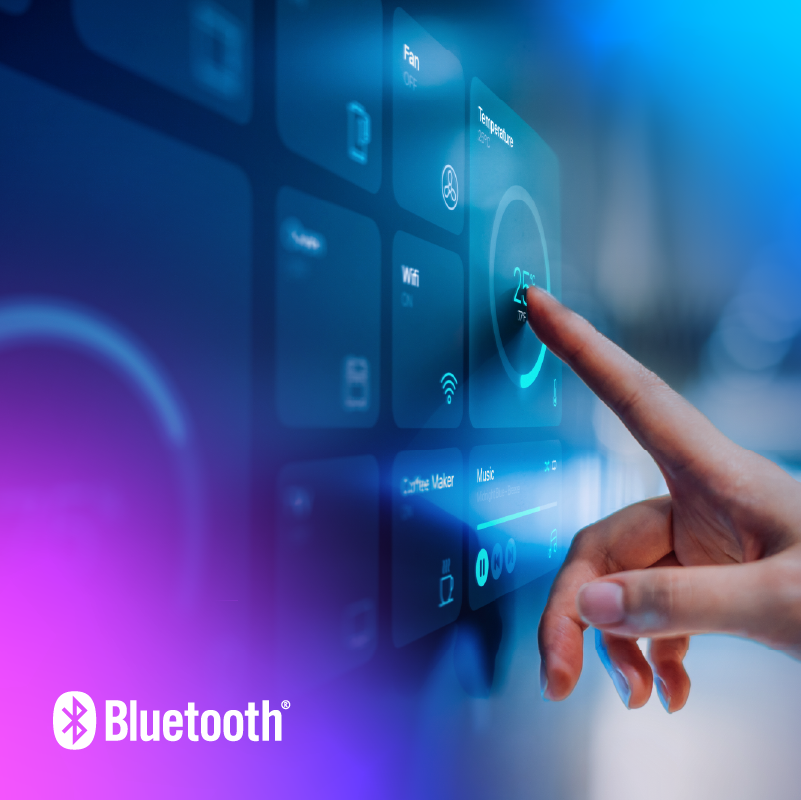
Networked lighting control is a significant contributor to human-centered building design incentives, and a wide range of research has proven the benefits of optimal lighting conditions in improving vision, increasing productivity and alertness, enhancing sleep quality and relaxation, accelerating patient recovery, and reducing stress, depending on the needs of the specific environment.
Bluetooth® NLC solutions, including sensors, switches, controllers, and luminaires, are forecasted to achieve a 15 percent CAGR between 2025 and 2030.
According to Bosch, a 28 percent improvement in working conditions can be brought about by proper lighting. The arrival of Bluetooth® Network Lighting Control (NLC), a full-stack standard for wireless lighting control, has accelerated adoption of secure, reliable, and interoperable Bluetooth® NLC solutions. These can play a critical role in optimizing lighting to the specific requirements of each building, while also reducing energy consumption.
The Bluetooth SIG recently adopted the Bluetooth HVAC Integration NLC Profile. This specification standardizes how occupancy data from NLC systems is exchanged with thermostats, enabling greater HVAC automation via Bluetooth® Mesh Networking. Combined with a growing range of Bluetooth® Mesh Networking qualified lighting products, businesses can enable scalable, interoperable networked lighting control and sensing across a range of building types.
Building health management and compliance
By automating the monitoring of sanitation, occupancy, and environmental factors, Bluetooth® sensors alert facility managers when cleaning is needed or when crowding exceeds safe levels, ensuring that spaces stay healthy and meet health and safety compliance standards. In urban settings, those same sensors can also enable environmental monitoring systems to measure noise pollution and other environmental factors, contributing to healthier public spaces and safer, more comfortable environments for everyone.
Some connected washroom solutions leverage Bluetooth® Mesh Networking to provide real-time monitoring, control, and maintenance of restroom assets such as faucets, soap dispensers, urinals, toilets, doors, water mains, and paper dispensers. These Bluetooth® Mesh Networking-equipped fixtures can be used to optimize replenishment, improve staff productivity, reduce downtime, and create more healthy and hygienic environments.
Creating a healthier world
Healthier spaces lead to healthier lives. By improving air quality, optimizing energy use, and ensuring health and safety compliance, Bluetooth® technology helps enable spaces to provide cleaner, more comfortable environments that foster better health and well-being.
To learn more about how Bluetooth technology empowers wellness and personal care, download the latest market research, Wireless well-being: How Bluetooth® technology is at the heart of healthcare transformation.
Bluetooth®技術は、医療施設の安全性、衛生、効率の向上を実現することで、患者ケアに変革をもたらしています。それと同時に、ワイヤレスセンサー、ネットワーク照明制御、人間を中心に据えた建築設計を通じて、より健康的で快適な環境の整備にも役立っています。
Bluetooth SIG(Special Interest Group)はABI Researchの協力を得て、Bluetooth®技術がより健康的な環境づくりを通じて健康とウェルビーイングの向上で重要な役割を担っている仕組みを解説する、最新の市場調査レポートを公開しました。
以下に、「人々の健康を支えるワイヤレス技術:Bluetooth®技術が医療変革の中核を担う理由」と題されたこのレポートから、一部抜粋してご紹介します。
より健康的な環境づくりに向けて
Bluetooth®技術は個人の健康管理を超えて、健康の向上を促進する空間の創出と、個人そして地域社会全体のウェルビーイングの向上にも貢献しています。Bluetooth®技術を活用することで、施設の空気質の向上、エネルギー使用の最適化、健康・安全基準の遵守促進が可能となります。その結果、より清潔で快適、かつ人々の健康増進を支援する環境づくりが実現します。
空気質のモニタリング
現在、さまざまなスマートビルや都市空間で、空気質をリアルタイムで監視するBluetooth®対応センサーの導入が進んでいます。これらのセンサーは汚染物質やアレルゲン、CO₂濃度、温度、湿度、電子たばこの蒸気、環境騒音を検知し、施設管理者によるビル内の各種システムの稼働の最適化に不可欠なデータを提供します。これらのセンサーにはバッテリー駆動で最長5年間の連続稼働が可能なものもあり、施設内に設置されたBluetooth®対応のアクセスポイントやゲートウェイとシームレスに接続できます。Bluetooth®技術によって健康基準を満たす室内空気環境を維持することで、呼吸器系の健康リスクを低減できます。
人間中心の建築設計
Bluetooth®技術は、建物のエネルギー消費を最適化することで、環境負荷の低減とともに、そこで過ごす来場者や入居者の快適性向上にも貢献しています。Bluetooth®対応のセンサーは、室内の人の有無や環境条件を検知し、それに応じて冷暖房や照明を制御。エネルギーを効率的に活用しながら、常に快適な空間を維持します。このように人間を中心としたシステムでは、適切な温度や照明環境を保つことでその空間を利用する人々のストレスや疲労を軽減し、健康状態の改善と生産性の向上という大きな価値をもたらします。
在室・環境センサー
会議室での利用に最適化されたコンパクトな企業向けセンサーは、在室状況の検知に加え、照度、湿度、温度を測定する機能を備えています。Bluetooth®技術によりバッテリーのみで動作可能で、配線工事も不要で容易に設置できます。
さらに、他のIoT機器との連携機能を備え、在室状況に応じ、会議室の自動予約および予約の解除、照明の制御、温度調節などスマートな施設管理を実現します。また、複数のセンサーをBluetooth® Meshネットワーキングで相互接続することで、より広い空間の管理にも対応できます。
ネットワーク照明制御(NLC)
ネットワーク照明制御は、人間中心の建築設計を実現する上で極めて重要な要素です。さまざまな研究成果によって、適切な照明には、視認性の向上、生産性や集中力の向上、睡眠の質の改善、リラクゼーション効果、患者の回復促進、ストレスの軽減など、特定の環境の必要性に応じた多岐にわたる効果が確認されています。
このような技術の発展を背景に、Bluetooth® NLCに対応したセンサー、スイッチ、コントローラー、照明器具などの市場は、2025年から2030年にかけて年平均成長率(CAGR)15%で成長すると予測されています。
例えばBoschは、照明環境の最適化による作業環境の改善効果は28%に上ると報告しています。このような照明制御の進化と普及を支える基盤となっているのが、ワイヤレス照明制御のフルスタックの業界標準規格である「Bluetooth®ネットワーク照明制御(NLC)」です。この規格に基づき、相互運用性、安全性、信頼性を兼ね備えたNLCソリューションの開発と普及が推進されています。これらのソリューションは、建物が持つ特定の要件に応じた照明環境の最適化と電力消費削減の両立において、重要な役割を果たしています。
Bluetooth SIGは最近、Bluetooth® HVAC Integration NLCプロファイルを採択しました。これにより、Bluetooth® NLCシステムが検知する在室データをHVAC(空調システム)と効率的に連携させることが可能になり、Bluetooth® Mesh ネットワーキングを介したHVAC制御のより大幅な自動化が可能になります。現在増えつつあるBluetooth® Meshネットワーキング対応の照明製品を活用すれば、さまざまな建物でスケーラブルかつ相互運用可能なネットワーク照明制御とセンシングのシステムを構築できます。
建物における衛生管理とコンプライアンス
Bluetooth®対応センサーを活用し、衛生状態、在室状況、環境要因を自動的にモニタリングするソリューションが登場しています。清掃の必要性や、混雑度が安全基準を超えた場合には、これらのセンサーから施設管理者へ自動で通知が送られるため、建物内の衛生環境と健康安全基準の継続的な遵守が可能になります。同様のセンサーは、都市空間では環境モニタリングシステムの構築に活用できます。騒音や汚染などの環境要因を計測し、より健康的な公共空間と、あらゆる人にとってより快適な環境の実現を支えています。
Bluetooth® Meshネットワーキングを活用したコネクテッドなスマート洗面所も登場しています。蛇口やソープディスペンサー、トイレ、ドア、給水管、ペーパータオルディスペンサーなど、洗面所内のあらゆる設備を一元的に監視•制御•管理できるシステムです。Bluetooth® Meshネットワーキングを活用することで、消耗品の補充タイミングや保守作業の効率化を図り、設備の稼働停止時間を削減して、常に清潔で衛生的な環境を維持することができます。
より健康的な世界の実現に向けて
より健康的な環境は、より健康的な暮らしにつながります。Bluetooth®技術を活用することで、施設の空気質の向上、エネルギー使用の最適化、健康・安全基準の遵守促進が可能となります。その結果、より清潔で快適、かつ人々の健康とウェルビーイングの実現を支援する環境づくりが実現します。
Bluetooth技術がウェルネスとパーソナルケアをどのように支えているかについて、詳しくは最新の市場調査レポート「人々の健康を支えるワイヤレス技術:Bluetooth®技術が医療変革の中核を担う理由」をダウンロードしてご覧ください。
