
Key Insights:
- Bluetooth is becoming a core enabler of edge AI rather than just a short-range wireless standard. That shift is opening new growth paths in wearables, ambient IoT, retail, healthcare, and industrial tracking, resulting in 8.1 billion Bluetooth® enabled device shipments by 2030
- The market is moving toward AI-native connectivity, connected MCUs, and ultra-low power designs. These advances, alongside the continued evolution of Bluetooth® technology, are making Bluetooth® connectivity more attractive for smaller, cheaper, and more intelligent devices at scale
- Some of the biggest opportunities for tech vendors now sit in fast-growing device categories such as smart glasses, smart labels, electronic shelf labels, and home healthcare monitors
主なポイント
- Bluetoothは近距離無線の標準規格という枠を超えて、エッジAIの中核をなす基盤技術になりつつあります。この転換により、ウェアラブル、アンビエントIoT、小売、医療、産業用追跡における新たな成長の道が開かれています。その結果、Bluetooth®対応デバイスの年間出荷台数は、2030年までに81億台に達する見通しです。
- 市場はAIネイティブな接続ソリューション、コネクテッドMCU、超低消費電力設計へと移行しています。これらの進歩とBluetooth®技術の継続的な進化により、Bluetooth®接続は、より小型で低コスト、インテリジェントなデバイスへの採用において、より魅力的な選択肢となっています。
- テクノロジーベンダーにとって、スマートグラス、スマートラベル、電子棚札(ESL)、在宅医療モニターなど急成長するデバイスカテゴリーが今後最大の成長機会の一つとなります。
The Bluetooth® market continues to transform rapidly in 2026, driven by advances in edge artificial intelligence (AI) and changing device requirements. Bluetooth® connectivity is enabling new product portfolios, partnerships, and platforms that accelerate AI integration across consumer and Internet of Things (IoT) markets.
Device and semiconductor vendors are increasingly embedding neural processing unit (NPU) support into their AI-native connectivity solutions. At the same time, the shift towards connected/wireless microcontroller units (MCUs) is also accelerating, which is essential to optimizing power efficiency, reducing bill of materials (BOM) cost and size, and simplifying product development.
These technological shifts are being combined with a sustained push toward ultra-low-power, energy-harvesting solutions and low-cost Bluetooth® connectivity. As a result, the market can now support new device categories that leverage edge intelligence.
Where is Bluetooth® connectivity creating new opportunities for technology vendors?
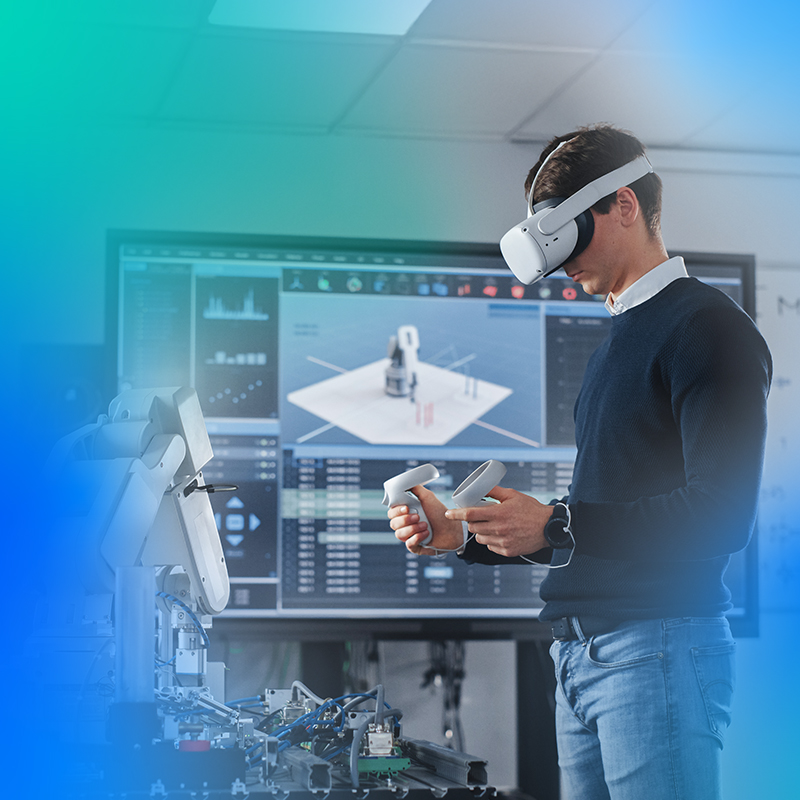
These trends and Bluetooth® innovations are unlocking lucrative opportunities across multiple verticals. ABI Research identifies the following as key growth vectors for consumer device makers and chipset suppliers in the coming years:
- New personal AI devices and wearable form factors
- Extended reality (XR) smart glasses
- Smart home automation and appliances
- Consumer robotics
On the IoT front, smart labels and ambient IoT solutions are also driving demand for Bluetooth® technology. From a volume perspective, these devices could dwarf the entire existing wireless connectivity market in the years to come.
For tech vendors, edge AI should be leveraged to support:
- Predictive maintenance in industrial IoT and smart building energy management
- Smart healthcare integration
- Secure access in automotive and smart buildings
- Supply chain visibility and inventory tracking
Many of these use cases will be strengthened by continued Bluetooth® LE innovation, including Bluetooth® Channel Sounding, Bluetooth® High Data Throughput, and ultra-low-latency human interface device (HID) solutions, among other enhancements. Consequently, the Bluetooth® ®market is expected to reach over 8.1 billion units shipped annually by 2030, up from 5.4 billion units in 2025.
The remainder of this article highlights several of the biggest opportunities for integrating Bluetooth® technology in the coming years, based on ABI Research’s latest forecasts.
Smart glasses
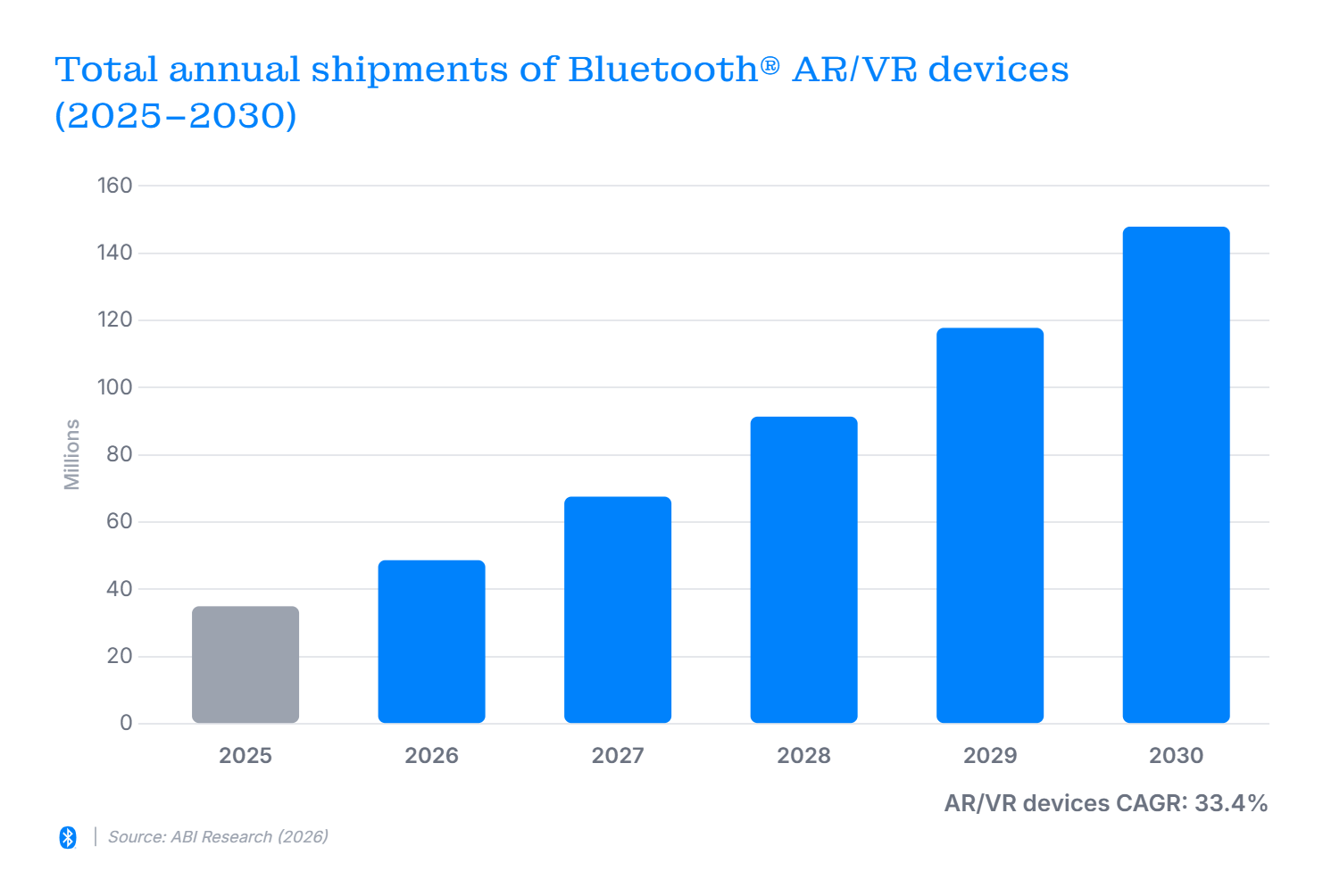
ABI Research is observing a clear shift toward no-display and AI display glasses, alongside traditional XR glasses that focus on entertainment and second-screen functionality. This has driven higher shipments of Bluetooth® enabled smart glasses in the last couple of years, with new devices, form factors, and production ramp-up expected over the next few years. According to our forecasts, the emergence of AI glasses will propel annual shipments of Bluetooth® smart glasses to 68 million units in 2030.
AI agents are becoming a standard feature in smart glasses solutions.To XR technology providers, AI is seen as a key driver of adoption, improving contextual awareness, accessibility, interactivity, and productivity. These are tangible benefits that customers can easily understand, driving stronger uptake across use cases.
Aligning with this trend, many companies now prioritize integrating AI capabilities in their latest product launches. Meta, Google, RayNeo, XREAL, and other XR market leaders are already embedding AI into their Bluetooth® supported offerings.
Smart labels
The minimal energy requirements of Bluetooth® technology make it an excellent match for smart labels. Smart labels are ultra-low-power connected labels used for logistics, retail inventory tracking, and supply chain monitoring. The emergence of ambient IoT solutions is driving rapid increases in this product category.
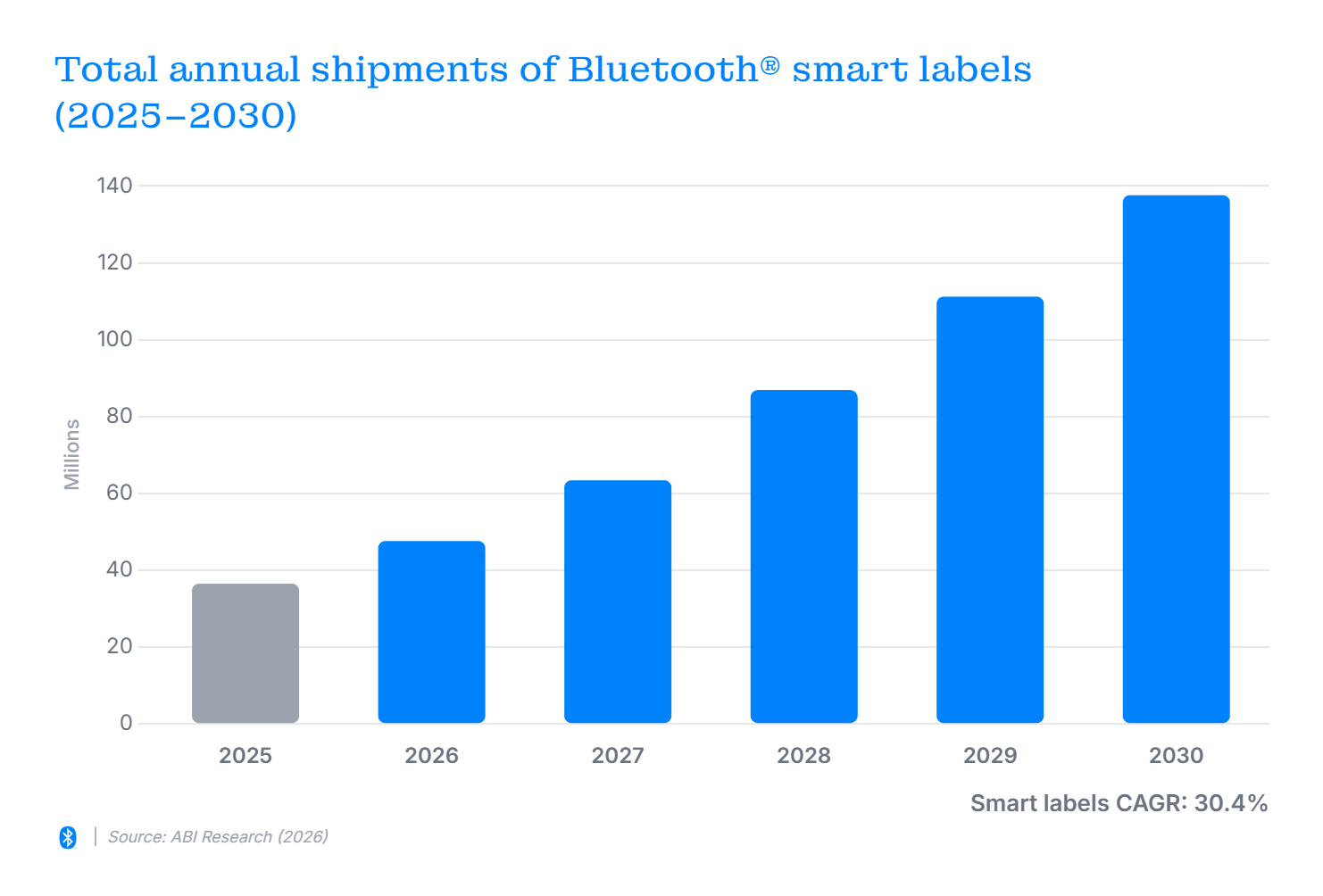
New ambient IoT product sectors, notably smart labels, are enabling a whole new class of Bluetooth® products to hit the market. ABI Research expects Bluetooth® smart labels shipments to accelerate rapidly over the next five years, growing at a compound annual growth rate (CAGR) of 30 percent.
In 2025, we saw notable progress for smart label technologies, and these are poised for significant growth in 2026, with battery suppliers and label vendors increasing production capacity. Concurrently, many existing and new customers are scaling their smart label deployments.
The popularity of Bluetooth® technology is clear, particularly with new silicon and experimentation around decentralized network infrastructure. ABI Research believes Bluetooth® connectivity could become a de facto standard for supply chain visibility going forward.
Bluetooth® Electronic Shelf Labels
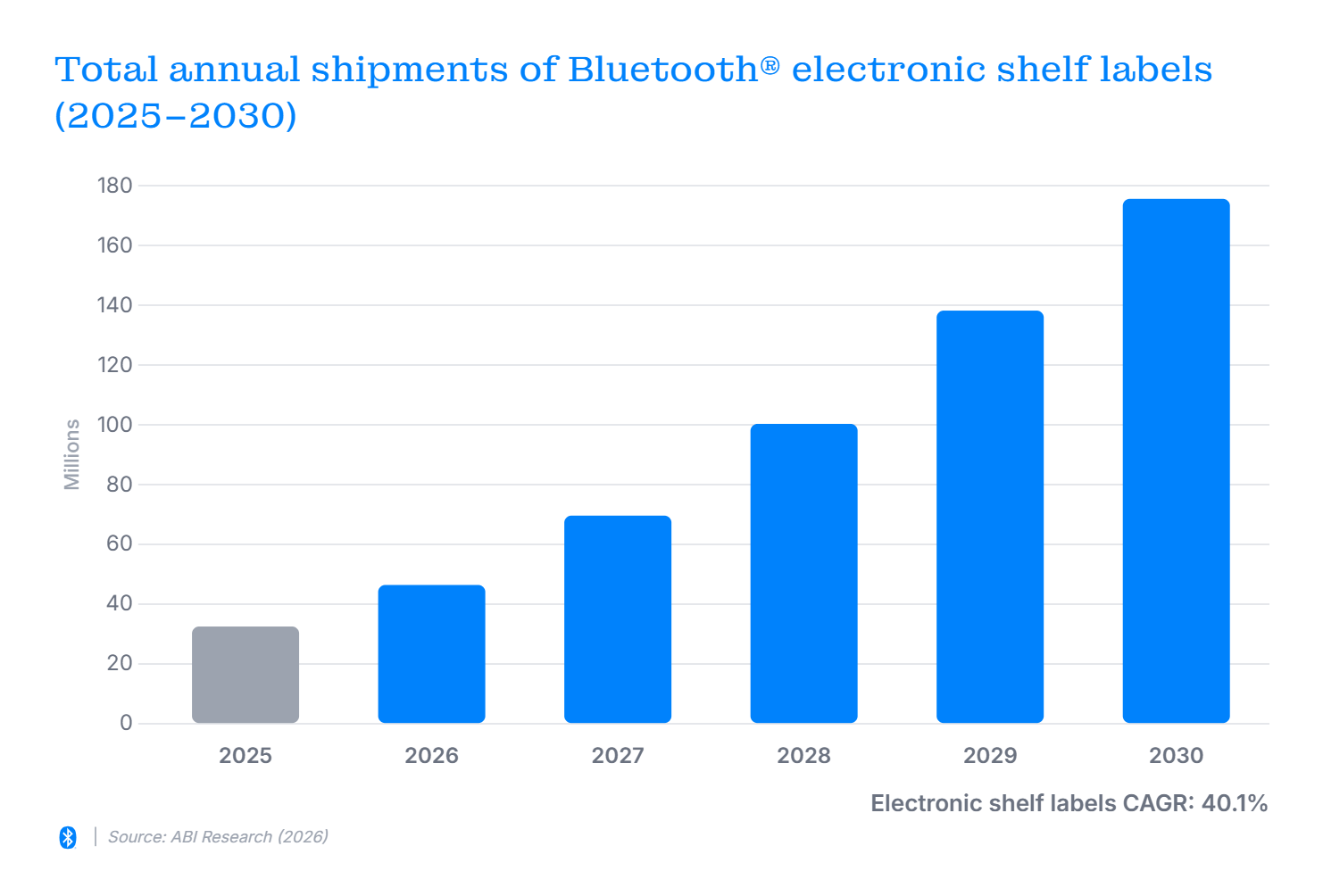
According to ABI Research, annual shipments of Bluetooth® Electronic Shelf Labels (ESL) are expected to reach nearly 176 million units by 2030, achieving a 40 percent CAGR. This positions Bluetooth ESLs as one of the fastest-scaling opportunities for technology vendors to leverage Bluetooth® connectivity.
The introduction of the Bluetooth ESL standard in 2023 has driven strong market growth, resulting in large-scale Bluetooth® ESL deployments across retail, warehousing, and other industries.
Several vendors are also now ramping up support for Bluetooth® technology in their ESL product portfolios. And those already using Bluetooth® connectivity are rapidly expanding their deployments as they recognize the substantial revenue streams being created.
Smart healthcare
Another segment expanding quickly for technology vendors comes from Bluetooth® enabled healthcare shipments, particularly for home monitoring applications. ABI Research forecasts shipments to increase 27 percent annually between 2025 and 2030.
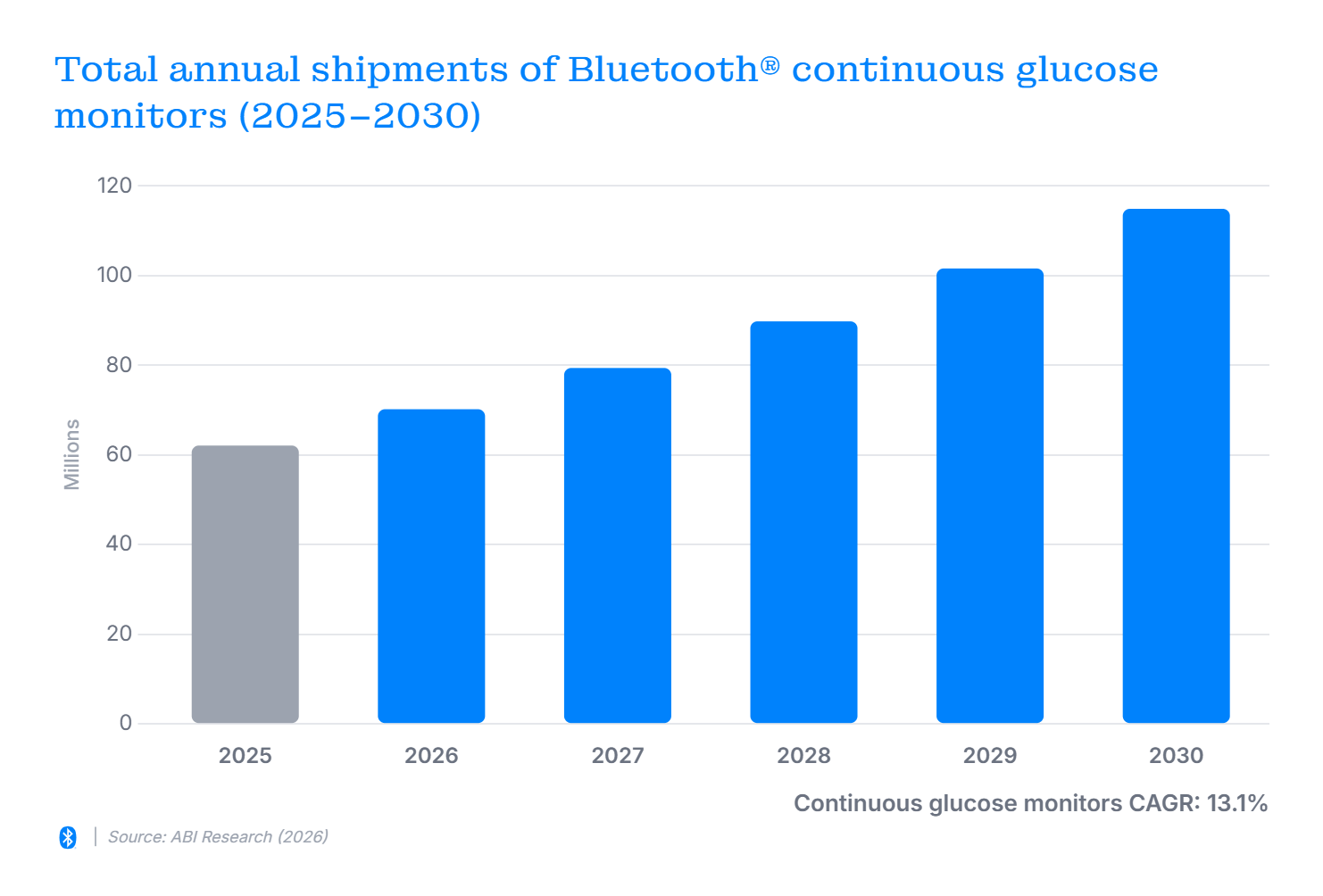
Key device categories in this segment include connected continuous glucose monitors (CGMs), digital scales, PERS devices, and blood pressure monitors. Annual Bluetooth® enabled CGM shipments alone are expected to reach 115 million units by 2030 — nearly double from 62.1 million units in 2025.
Demographic shifts, particularly aging populations in densely populated countries, are a key driver of this growth. APAC countries like Japan and various European countries, such as Italy, Germany, and Portugal, are notable populations in need of home healthcare solutions.
More broadly, growing rates of chronic disease are driving demand for continuous vital monitoring. Bluetooth® technology provides a low-power, cost-effective means of generating life-saving and life-improving health data.
Finally, rising healthcare costs are another key catalyst for smart home healthcare device adoption. With Bluetooth® compatibility, pre-emptive disease management is more affordable and attractive to customers.
Conclusion
Bluetooth® technology is increasingly enabling edge intelligence across both consumer and enterprise markets. ABI Research’s projection of more than eight billion Bluetooth® supported device annual shipments by 2030 highlights the scale of this shift.
Leading vendors in 2026 understand this shift and are increasingly supporting AI-native chipsets, connected MCUs, and ultra-low power architectures. These are enabling new immersive experiences, enhanced supply chain visibility, proactive healthcare monitoring, and more.
Over the next decade, Bluetooth® technology growth will not be defined by connectivity alone; it will be defined by how effectively vendors consolidate the latest Bluetooth® features, edge AI, and scalability into a single offering.
Additional Bluetooth® device shipment forecasts can be viewed on the Bluetooth® market dashboard. You can filter by device type and radio standard to deliver the granularity needed to optimize product portfolios. Learn More.
Bluetooth®市場は2026年も急速な変革を続けています。その原動力は、エッジAI(人工知能)の進歩と、デバイス要件で生じている変化です。コンシューマー市場とIoT市場全体では、Bluetooth®接続によって、AIの統合を加速する新たな製品ポートフォリオ、パートナーシップ、プラットフォームが実現しています。
デバイスおよび半導体ベンダーでは、自社のAIネイティブの接続ソリューションにNPU(ニューラルプロセッシングユニット)へのサポートを組み込む傾向が強まっています。同時に、電力効率の最適化、BOM(部品表)コストの削減、小型化、そして製品開発の簡素化に不可欠な、コネクテッドMCUおよびワイヤレスMCU(マイクロコントローラーユニット)への移行も加速しています。
これらの技術的変化は、超低消費電力の環境発電ソリューションと低コストなBluetooth®接続に向けた継続的な取り組みと一体となって進んでいます。その結果、市場はエッジインテリジェンスを活用する新しいデバイスカテゴリーをサポートできるようになりました。
Bluetooth®接続がテクノロジーベンダーに新たな機会をもたらす領域
こうしたトレンドと、Bluetooth®によるイノベーションによって、複数のバーティカル市場で大きな商機が生まれています。ABI Researchが今後数年間にわたりコンシューマーデバイスメーカーとチップセットサプライヤーの主要な成長分野となると予測している市場は、以下の通りです。
- 新しい個人向けAIデバイスとウェアラブルのフォームファクター
- XR(拡張現実)スマートグラス
- スマートホームオートメーションとスマート家電
- 民生用ロボット
IoTの分野では、スマートラベルとアンビエントIoTソリューションもBluetooth®技術への需要をけん引しています。出荷台数の点からすると、これらのデバイスは今後数年以内に既存のワイヤレス接続市場全体を凌駕する規模になる可能性があります。
テクノロジーベンダーにとって、エッジAIは以下の用途を支えるために活用されるべきです。
- IIoT(産業用IoT)とスマートビルのエネルギー管理における予知保全
- スマートヘルスケアへの統合
- 自動車とスマートビルにおけるセキュアアクセス
- サプライチェーンの可視化と在庫追跡
これらのユースケースの多くは、Bluetooth® Channel Sounding、Bluetooth®高データスループット、超低遅延HID(ヒューマンインターフェースデバイス)ソリューションなど、Bluetooth® LEの継続的な進化を通じてさらに強化されます。その結果、Bluetooth®市場は2025年の54億台から、2030年には年間81億台超へと拡大が予測されています。
以下では、Bluetooth®技術の搭載によって、今後数年間にわたり最大の成長機会が生まれる市場の数々を、ABI Researchの最新予測に基づきご紹介します。
スマートグラス
ABI Researchは、従来のエンターテインメントやセカンドスクリーン機能に特化したXRグラスと並び、ディスプレイなしのグラスとAIディスプレイグラスへの明確なシフトを観察しています。これにより、ここ数年でBluetooth®対応スマートグラスの出荷台数が増加しており、今後数年間にわたり、新しいデバイス、フォームファクター、生産規模の拡大が見込まれています。ABI Researchの予測では、AIグラスの台頭により、Bluetooth®スマートグラスの年間出荷台数は2030年に6,800万台まで到達すると見られます。
AIエージェントはスマートグラスソリューションの標準機能になりつつあります。XR技術のプロバイダーにとって、AIは採用の主要な推進力であり、コンテキスト認識、アクセシビリティ、インタラクティブ性、生産性を向上させると見なされています。これらの具体的なメリットは顧客にとって分かりやすく、ユースケース全体の普及をより強く促進しています。
このトレンドに沿う形で、多くの企業が最新の製品発表においてAI機能の統合を優先しています。Meta、Google、RayNeo、XREALなど、XR市場の主要企業では、すでにBluetooth®対応製品にAIを組み込んでいます。
スマートラベル
Bluetooth®技術はエネルギー要件が極めて低いため、スマートラベルに非常に適しています。スマートラベルは超低消費電力のコネクテッドラベルで、物流、小売業における在庫の追跡、サプライチェーンのモニタリングに使用されます。アンビエントIoTソリューションの台頭がこの製品カテゴリーの急速な成長を促しています。
スマートラベルを筆頭に、このアンビエントIoTの新たな製品分野によって、まったく新しいクラスのBluetooth®製品が市場参入を実現しています。ABI Researchの予測では、Bluetooth®スマートラベルの出荷台数は今後5年間で急速に加速し、30%のCAGR(年平均成長率)で成長すると予測しています。
2025年にはスマートラベル技術で大きな進展が見られ、バッテリーサプライヤーとラベルベンダーが生産能力を拡大する中、2026年の大幅な成長に向けた態勢が整っています。同時に、既存・新規の多くの顧客がスマートラベルのより大規模な展開を進めています。
Bluetooth®技術の人気は明らかで、特に新しい半導体と分散型ネットワークインフラをめぐる試みにおいて顕著です。ABI Researchは、Bluetooth®接続が今後のサプライチェーンの可視性向上における事実上の標準になる可能性があると考えています。
Bluetooth®電子棚札(ESL)
ABI Researchによると、Bluetooth®電子棚札(ESL)の年間出荷台数は2030年までに1億7,600万台近くに達し、CAGRは40%に達すると予測されています。これによりBluetooth ESLは、テクノロジーベンダーがBluetooth®接続を活用できる最も急速に拡大する成長機会の一つとして位置付けられます。
Bluetooth ESLの標準規格は、2023年の導入によって市場の力強い成長の原動力となり、小売、倉庫、その他の産業にわたり、Bluetooth® ESLの大規模な展開をもたらしています。
現在、複数のベンダーが自社のESL製品ポートフォリオで、Bluetooth®技術への対応の拡充を進めています。またすでにBluetooth®接続を活用しているベンダーは、それによって大きな収益が生まれていることを認識し、展開を急拡大しています。
スマートヘルスケア
Bluetooth®対応ヘルスケアデバイスの出荷は、テクノロジーベンダーにとって急成長しているもう一つの領域で、特に在宅モニタリング用のデバイスが顕著です。ABI Researchは2025年から2030年にかけての出荷数が、年間27%のペースで成長すると予測しています。
この分野の主要デバイスには、コネクテッド持続血糖モニター(CGM)、デジタル体重計、PERS(個人用緊急対応システム)デバイス、血圧計などが含まれます。Bluetooth®対応CGMだけで、年間出荷台数は2025年の6,210万台から2030年にはほぼ倍増し、1億1,500万台に達すると予測されています。
人口動態における変化、特に人口密度の高い国々における高齢化が、この成長の主要な推進力となっています。日本などのAPAC諸国と、イタリア、ドイツ、ポルトガルなどヨーロッパ諸国は、在宅医療ソリューションを必要とする市場として顕著です。
より広い観点では、慢性疾患の罹患率の増加が生体指標の継続モニタリングに対する需要を促進しています。Bluetooth®技術は、命を救い生活を向上させるための健康データ生成に役立つ、低消費電力でコスト効率の高い手段を提供します。
最後に、医療費の上昇も在宅医療用スマートデバイスの採用を促す重要な要因です。Bluetooth®との互換性により、顧客にとって予防的な疾病管理はより手頃で魅力的なものになります。
まとめ
Bluetooth®技術はコンシューマー市場とエンタープライズ市場の両方でエッジインテリジェンスを実現するイネーブラーとしての役割を強めています。この役割の変化が持つ規模の大きさは、Bluetooth®対応デバイス出荷数が2030年までに年間81億台超に及ぶというABI Researchによる予測に表れています。
2026年、業界をリードするベンダー各社はこの変化を理解し、AIネイティブチップセット、コネクテッドMCU、超低消費電力アーキテクチャへの対応を強化しています。これらによって、新しい没入型の体験やサプライチェーンの可視化、プロアクティブな医療モニタリングなどが実現しています。
今後10年にわたり、Bluetooth®技術は接続性の枠を超えて成長していくでしょう。その成長は、ベンダーがいかに効率的に最新のBluetooth®機能、エッジAI、スケーラビリティを単一の製品・ソリューションに統合できるかによって形づくられます。
上記で解説したものに加え、そのほかのBluetooth®デバイスに関する予測はBluetooth®マーケットダッシュボードでご覧いただけます。デバイスタイプと無線標準規格によってフィルタリングし、より良い製品ラインアップの実現に役立つきめ細かな情報をご確認ください。詳しくはこちらをご覧ください。
