Industrial digitalization is accelerating across manufacturing, logistics, construction, healthcare, and agriculture. Sensors, tools, and machines are increasingly connected to enable monitoring, tracking, and predictive maintenance — but traditional wired installations often limit scalability, flexibility, and cost efficiency.
Wireless connectivity removes many of these barriers, yet industrial environments place high demands on reliability, robustness, and power efficiency. Metal structures, electromagnetic interference, dense device deployments, and long operational lifetimes challenge many wireless technologies.
Bluetooth® technology has evolved far beyond its consumer origins to address these requirements. Continuous enhancements have strengthened robustness, reduced power consumption, and enabled new capabilities such as precise positioning, responsive human–machine interfaces, and scalable sensor networks. As a result, Bluetooth connectivity is increasingly adopted as a standardized, mass‑market wireless platform for industrial monitoring, asset tracking, and predictive maintenance, supporting deployments from small installations to large‑scale industrial sites.
Built for scale, not just performance
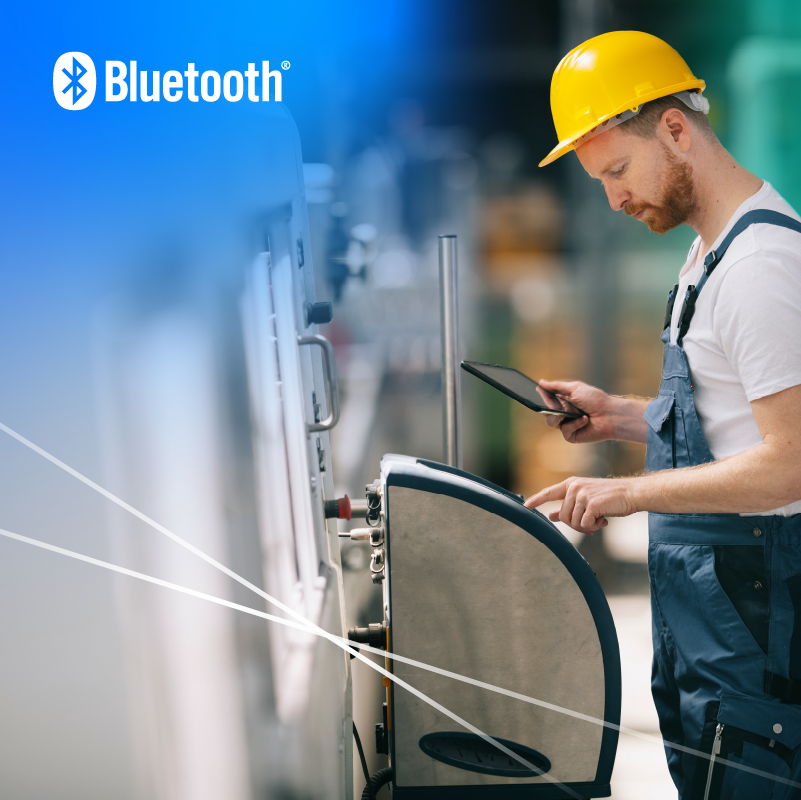
Industrial wireless connectivity must deliver more than reliable radio performance. Long product lifecycles, multisite deployments, and future expansion require technologies that are standardized, interoperable, and supported by a broad ecosystem.
Bluetooth technology stands out by combining industrial capabilities with global adoption. Its extensive ecosystem — spanning silicon, modules, devices, tools, and software platforms — reduces deployment risk, ensures long-term availability, and enables cost-efficient scaling from pilot projects to large industrial installations. This makes Bluetooth technology a strong foundation for reliable, future-ready industrial connectivity.
A continuously growing ecosystem
The number of Bluetooth devices shipped each year exceeds five billion and is expected to reach close to eight billion annual shipments by the end of this decade (source ABI Research). Bluetooth technology has become the standard for wireless connectivity across a wide range of mobile devices, including smartphones, tablets, headphones, and sensors. In industrial applications, handheld controllers as well as fixed and mobile sensors are used for monitoring and control, extending Bluetooth connectivity far beyond its well-known consumer audio and media use cases. This ecosystem enables mass-market volumes and economies of scale for global industrial digital deployments.
Robustness for challenging industrial environments
Bluetooth transmissions dynamically adjust their frequency-hopping pattern through adaptive frequency hopping (AFH) to maintain a high signal-to-noise ratio in frequency-selective multipath channels and a high signal-to-interference ratio when channels are shared with other technologies. Automatic power control reduces output power to the level required to maintain connections while minimizing interference with other nearby radios in the 2.4 GHz ISM band, including other Bluetooth connections.
Forward error correction (FEC) allows receivers to correct limited bit errors introduced in harsh environments. Bluetooth technology and modules are designed to simplify development and reduce time to market for industrial segments and verticals, allowing them to focus on their core value. As a result, Bluetooth modules are well suited for industrial applications in challenging environments where wireless robustness and reliability are crucial.
Low energy for tiny sensors and tracking
Bluetooth LE is well suited for battery-operated devices in industrial applications that periodically transfer small amounts of data and require ultra-low power consumption. High maintenance costs and the workforce required to manage devices and replace batteries can erode an otherwise promising business case for industries pursuing digital operations. The small size, long operating lifetime, and robust connectivity of Bluetooth radio modules are key enablers in the digital transformation of industries using predictive maintenance and asset/sensor tracking. Wireless connectivity, rather than installing and maintaining cables for each sensor and machine, is preferred across many industries. As a result, adoption of Bluetooth connectivity in industrial applications is growing rapidly, driven by its scalability and flexibility for data sharing, control, and tracking use cases.
Bluetooth® Core Specification expansion meets industrial needs
Bluetooth has introduced several important features for industrial monitoring, tracking, and predictive maintenance applications. The set of industrial features includes Bluetooth Direction Finding with angle of arrival (AoA) support. This feature enables devices and modules to determine direction with excellent stability, supporting industrial use cases such as asset tracking, indoor navigation, secure access, and geofencing safety areas for workers.
The Bluetooth LE Power Control feature enables devices to dynamically optimize the transmission power used to communicate between connected sensors and devices. This feature improves overall system performance and reduces power consumption. The Enhanced Attribute Protocol (EATT) supports concurrent transactions, aiming to reduce end-to-end latency for improved responsiveness and a better experience in industrial environments.

Further enhancements for the demanding industrial applications have been introduced to provide higher transmission efficiency for devices. With Periodic Advertising Enhancement, received data is scanned only once, and duplicates are discarded immediately.
Host-to- Controller Encryption Key Size Control Enhancements allow the host to specify a minimum key size, enabling the device to use either longer encryption keys or faster encryption algorithms.
LE Connection Sub-rating enables quick switching between low- and high-duty cycles. Some product types spend much of their time in a low-duty-cycle connection mode to conserve power. When a particular application, like monitoring, requires higher bandwidth, connection parameters must change as quickly as possible.
LE Channel Classification Enhancement enables peripheral Bluetooth devices to perform channel classification, thereby improving throughput and reliability.
The key feature in Bluetooth® Core 6.0 is Bluetooth Channel Sounding, which enables accurate distance estimation between Bluetooth devices. We understand that demanding industrial use cases and challenging environments benefit more from the phase-based ranging (PBR) method. This improves asset tracking applications and secure digital key systems.
Bluetooth® Direction Finding and Bluetooth® Channel Sounding features both enable higher tracking accuracy in industrial environments than what was previously possible using received signal strength indicator (RSSI) values. The evolution of Bluetooth technology is well suited to address the growing demands and strong requirements for precise tracking in automation and manufacturing sites with metal surfaces and multiple objects in the signal paths between sensors and devices.
The cable replacement in industrial environments can be further expanded with Bluetooth Mesh Networking to support large‑scale, many‑to‑many device networks. It is designed for reliable communication across hundreds or thousands of nodes, making it well suited for industrial applications such as lighting control, building automation, sensor networks, and condition monitoring.
Feature expansion towards Industry 5.0
Bluetooth technology is constantly improving, and new features will support enhanced interaction between humans and robotics at the center of industrial systems, while increasing resilience in the higher levels of automation. Looking ahead, we expect key features in the transition towards Industry 5.0 to enable even more efficient predictive maintenance with minimized production downtime and enhanced safety for workers.
Rapid responsiveness is critical in human-centric collaboration with robotics in manufacturing and automation processes. The significantly shorter connection intervals (CSI) enable fast-responding sensors as well as ultra-low latency human-machine interface (HMI) and human-interface device (HID) protocols based on sub-millisecond intervals.
Further technology enhancements for predictive maintenance, monitoring, and tracking in the transition towards Industry 5.0 include:
- High data throughput supports speeds of up to 8 Mbps, enhancing performance for high-bandwidth and demanding industrial applications such as augmented reality and large data transfers.
- Higher frequency bands will ensure spectrum availability and pave the way for future Bluetooth capacity enhancements and larger installations. Additional spectrum in higher frequency bands provides the necessary reliability and robust connectivity in industrial environments where hundreds of sensors operate and share data in crowded areas and dense deployments such as indoor navigation using Bluetooth Direction Finding AoA, secure access control systems, low‑latency human–machine interfaces (HMI) enabled by Bluetooth Channel Sounding, and industrial Auracast™ deployments for broadcast communication and worker information systems. Operation in higher frequency bands also enables multi-antenna configurations for enhanced direction finding and channel sounding accuracy in smaller devices and modules.
The evolution of Bluetooth technology is well suited to address the growing demands and strong requirements for precise tracking in automation and manufacturing sites with metal surfaces and multiple objects in the signal paths between sensors and devices.
Bluetooth technology is an enabler for industrial digitalization and Industry 5.0

Industrial environments are moving beyond early automation towards more flexible, sustainable, and human‑centric systems. Bluetooth technology is well positioned to support this transition by combining low power consumption, robust wireless performance, and a continuously expanding feature set tailored to industrial needs.
From predictive maintenance sensors and asset tracking to human–machine interfaces and worker safety applications, Bluetooth connectivity enables scalable wireless deployments that reduce installation complexity and maintenance effort while improving operational visibility. Ongoing enhancements further strengthen capabilities for precise positioning, low‑latency interaction, and reliable operation in dense and challenging environments.
As industries progress from Industry 4.0 toward Industry 5.0, Bluetooth technology provides a standardized and future‑ready wireless foundation, supporting collaboration between people, machines, and digital systems while enabling productivity gains, enhanced safety, and long‑term sustainability in industrial operations.
Industry 5.0: human-centric collaboration with robotics
The human-centric industrial scenarios described and proposed under the Industry 5.0 concept require advanced technologies to achieve sustainability goals. The evolution of Bluetooth technology provides key enablers for realizing the Industry 5.0 vision, where sensors, data processing, transmission, and collaboration are fundamental elements.
産業のデジタル化が、製造業、物流、建設、医療、農業などさまざまな分野で加速しています。監視・追跡、予知保全を目的として、各種センサー、ツール、機器を接続することが増えていますが、多くの場合、従来の有線接続では設置の拡張性、柔軟性、コスト効率が限られてしまいます。
ワイヤレス接続は、このような制約の多くを解消します。しかし、産業現場では極めて高い信頼性と堅牢性、電力効率が求められます。また、多くのワイヤレス技術にとっては、金属製の構造物、電磁干渉、デバイスの配備密度の高さ、長期にわたる稼動期間が課題となります。
Bluetooth®技術は、コンシューマー向けとして誕生した時代から、大きな進化を遂げ、これらの課題に対応しています。継続的な機能拡張によって堅牢性の向上と電力消費の削減を図るほか、高精度の測位、応答性に優れたHMI(ヒューマンマシンインターフェース)、拡張性あるセンサーネットワークなど新機能も実現しています。その結果、Bluetooth接続は標準化されたマス市場向けのワイヤレスプラットフォームとして、産業用監視、資産追跡、予知保全における採用が進み、小規模な設置から大規模産業施設まで、さまざまな現場で機器の配備を支えています。
性能と拡張性を両立
産業用のワイヤレス接続で必要となるのは、信頼性の高い無線性能だけではありません。長い製品寿命、複数現場への展開、将来的な拡張性も求められることを考えると、その技術は標準規格に基づき、相互運用性があり、広範なエコシステムに支えられている必要もあります。
Bluetooth技術は産業に適した各種機能を備えていることに加え、世界的に普及している点が他とは一線を画します。シリコンチップ、モジュール、デバイス、ツール、ソフトウェアプラットフォームなど広範にわたるエコシステムが存在するため、展開リスクが低減され、長期的な入手可能性が保証されて、パイロットプロジェクトから大規模産業施設まで、コスト効果の高い拡張性が可能になります。こうしてBluetooth技術は、信頼性と将来性を兼ね備えた産業用コネクティビティを構築する強力な基盤となります。
成長を続けるエコシステム
Bluetoothデバイスの年間出荷台数は50億台を超えており、ABI Researchによると、2020年代末には80億台近くに達すると予想されています。Bluetooth技術は、スマートフォン、タブレット、ヘッドホン、センサーなど、幅広い種類のモバイルデバイスでワイヤレス接続の標準規格となっています。産業用途では監視・制御用のハンドヘルドコントローラや固定型センサー、モバイルセンサーに採用されるなど、Bluetooth接続の活用範囲は、一般的によく知られるコンシューマーオーディオやメディア関連のユースケースをはるかに超えています。このようなエコシステムの存在が大量供給を可能にし、グローバルな規模での産業のデジタル化においてスケールメリットを生み出しています。
過酷な産業現場に対応できる堅牢性
Bluetooth通信では、適応型周波数ホッピング(AFH)によって周波数ホッピングのパターンを動的に調整し、周波数選択性マルチパスチャネルにおける信号対雑音比(SNR)と、チャネルを他の技術と共用する場合の信号対干渉比(SIR)を高く維持します。また、自動電力制御によって、接続の維持に必要なレベルまで出力を下げると同時に、他のBluetooth接続を含め、付近に存在する2.4GHz ISMバンドの他の無線機器との干渉を最小限に抑えます。
前方誤り訂正(FEC)は、厳しい環境の中で発生するビットエラーの一部に対し、受信側が訂正を行うことを可能にします。Bluetoothの技術とモジュールは、各種産業において開発の簡素化と市場投入までの期間短縮ができるように設計されているため、企業は自社のコアバリューに集中できます。以上の点から、Bluetoothモジュールはワイヤレスの堅牢性と信頼性が極めて重要な意味を持つ、過酷な環境下での産業用途に適しています。
極小センサーと追跡に最適なBluetooth LE
Bluetooth LEは、定期的に少量のデータを転送する、電力消費の極めて低い産業用途のバッテリー駆動デバイスに適しています。デジタル化に取り組む企業にとって、デバイスの管理やバッテリー交換に高いメンテナンスコストと人員が必要となると、有望な事業計画を損なう恐れがあります。Bluetooth無線モジュールは小型で耐用時間が長く、堅牢な接続性を備えているため、予知保全と資産・センサー追跡を活用してデジタルトランスフォーメーション(DX)を進める産業にとって、重要なイネーブラーとなります。多くの産業では、各センサーおよび機械用にケーブルを設置・保守するよりも、ワイヤレス接続が選ばれています。こうして、データ共有・制御・追跡などの用途における拡張性と柔軟性の高さから、産業用途におけるBluetooth接続の採用は急速に拡大しています。
産業ニーズ対応のためのBluetooth®コア仕様の機能拡張
Bluetoothはこれまで、産業分野における監視・追跡、予知保全用の重要な機能をいくつか導入しています。その一つが受信角度(AoA)による測位に対応したBluetooth方向検知です。これは、デバイスやモジュールが極めて安定的に方向を特定できるようにする機能で、資産追跡、屋内ナビゲーション、セキュアアクセス、作業者安全地帯のためのジオフェンシングなど産業用ユースケースをサポートしています。
また、Bluetooth LE Power Controlは、センサーおよびデバイス間の通信に使用される電力を動的に最適化できます。これにより全体的なシステムパフォーマンスを向上させ、電力消費が抑えられます。EATT(Enhanced Attribute Protocol、拡張属性プロトコル)はトランザクションの同時実行に対応し、エンドツーエンドの遅延を減らして産業現場における応答性と使用体験の向上を図ります。
このほかにも、要求の厳しい産業用途向けの機能拡張として、デバイスの転送効率を高める改良が導入されています。定期アドバタイズの機能拡張によって、受信されたデータは一度だけスキャンされ、重複は即座に破棄されます。
ホスト・コントローラ間暗号化キーサイズ制御の拡張(Host-to-Controller Encryption Key Size Control Enhancement)では、ホストが鍵の最小サイズを指定できるようになり、デバイスがより長い暗号化キーを使用するか、より高速な暗号化アルゴリズムを使用するかを選べます。
LE接続サブレーティングでは、デューティサイクルの高低を素早く切り替えることができます。製品のタイプによっては、電力消費を抑えるため、ほとんどの時間で低デューティサイクルモードとなるものがあります。監視など、特定のアプリケーションで高い処理能力が必要になる場合には、可能な限り迅速に接続パラメータを変更する必要があります。
LEチャネル分類に関する機能拡張では、Bluetoothの周辺機器でチャネル分類ができるようになり、スループットと信頼性が向上しました。
Bluetooth® Core 6.0のカギとなる機能は、Bluetoothデバイス間の正確な測距を可能にするBluetoothチャネルサウンディングです。要求の厳しい産業用途のユースケースと過酷な環境においては、位相ベース測距(phase-based ranging、PBR)がより大きなメリットをもたらし、資産追跡アプリケーションやセキュアなデジタルキーシステムの向上に役立ちます。
Bluetooth®方向検知とBluetooth®チャネルサウンディングはどちらも、RSSI(Received Signal Strength Indicator、受信信号強度)値を使用した従来の手法に比べ、産業現場における追跡の精度を高めます。オートメーションおよび製造現場では、金属面が多く、センサーとデバイスとの間の信号経路に複数の物体が存在しています。Bluetooth技術の進化は、そうした環境における精密な追跡への需要と要件の高まりに対応する上で、非常に適しています。
Bluetoothメッシュネットワークは、産業現場における無線化をさらに進め、大規模な多対多のデバイスネットワークを実現できます。Bluetoothメッシュネットワークは数百・数千のノード間で信頼性の高い通信ができるように設計されているため、照明制御、ビルオートメーション、センサーネットワーク、状態監視などの産業用途に適しています。
インダストリー5.0に向けたさらなる機能強化
Bluetooth技術は常に改良を重ねています。新しく登場する機能は、産業システムの中心にある人とロボティクスとの協業強化をサポートしながら、より高度なオートメーションにおけるレジリエンスの向上も支えることになるでしょう。今後は、インダストリー5.0に向けて登場する主要機能によってさらに効率的な予知保全が実現し、生産ダウンタイムの最小化と、作業者の安全性強化が図られていくことが予想されます。
製造・オートメーションのプロセスで行われるロボティクスとの人を中心とした協業において、迅速な応答性は極めて重要です。接続間隔の大幅な縮小を実現する SCI(Shorter Connection Intervals)によって、応答の早いセンサーや、ミリ秒以下の間隔に基づいた超低遅延HMI(ヒューマンマシンインターフェース)およびHID(ヒューマンインターフェースデバイス)プロトコルが可能になります。
インダストリー5.0に向けた予知保全、モニタリング、追跡に関する技術強化には、さらに以下のものもあります。
- 高データスループット(HDT):最大8Mbpsまでの速度をサポートし、ARや大量のデータ転送など、処理負荷が高く要求の厳しい産業アプリケーションのパフォーマンスを改善します。
- 高周波数帯域対応:これにより利用可能な周波数があることが保証され、将来的なBluetoothの能力強化やより大規模な展開への道を切り開きます。高周波数帯域の周波数追加は、Bluetooth方向検知AoAを使用する屋内ナビゲーション、Bluetoothチャネルサウンディングが実現するセキュアな入退管理システムや低遅延HMI、およびブロードキャスト通信と作業者情報システムのための産業用Auracast™配備など、数百単位のセンサーが稼働し、密に配備された密集エリアでデータを共有する産業現場において、信頼性と堅牢な接続性を実現します。高周波数帯域における稼働は、小型デバイスやモジュールにおける方向検知とチャネルサウンディングの精度を高めるためのマルチアンテナ構成も可能にします。
Bluetooth技術が産業のデジタル化とインダストリー5.0のイネーブラーに
産業現場は初期のオートメーションから先へと進み、より柔軟でサステナブル、かつ人を中心に据えたシステムへと変化しつつあります。Bluetooth技術は低消費電力、堅牢なワイヤレス性能、産業ニーズに合わせた継続的な機能拡張で、この移行を十分に支える力があります。
予知保全用センサー、資産追跡からHMI、作業者の安全のためのアプリケーションまで、Bluetooth接続は導入時の複雑な手間とその後の保守を低減しながらオペレーションの可視化を向上させる、拡張性の高いワイヤレス技術の展開を可能にします。さらに継続的な機能拡張によって、稠密で難易度の高い環境における高精度な測位、低遅延での操作、信頼性の高い稼働のための機能を強化しています。
産業界がインダストリー4.0からインダストリー5.0へと進む中、Bluetooth技術は標準化された将来性あるワイヤレス基盤を提供します。それにより、人、機械、デジタルシステム間の協業を支援しながら、産業オペレーションにおける生産性向上、安全強化、長期的なサステナビリティを実現します。
インダストリー5.0:人を中心にロボティクスとの協業を推進
「インダストリー5.0」のコンセプトの下では、人中心の産業シナリオが思い描かれ、提示されていますが、そのシナリオでサステナビリティの目標を達成するには、先進技術が必要です。Bluetooth技術の進化は、センサー、データ処理、伝送、協業が基本の要素となるインダストリー5.0の主要なイネーブラーを提供し、ビジョンの実現に大きく貢献します。
