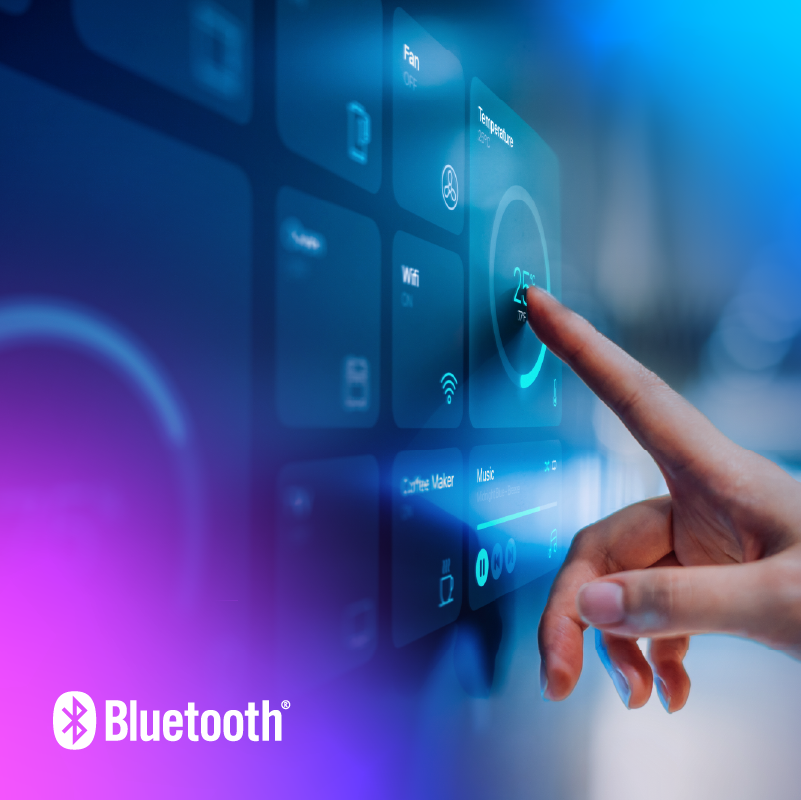
Earlier this year, the Bluetooth Special Interest Group (SIG) released the Bluetooth HVAC Integration NLC Profile, which supports direct integration with HVAC systems and marks a significant advancement in building automation. This enhancement enables smarter, more energy-efficient systems by allowing lighting and HVAC components to communicate seamlessly over a standardized wireless framework.
I recently spoke with Chris Wolgamott CEM, CDSM, principal product manager, technology and product management, at the Northwest Energy Efficiency Alliance (NEEA). Chris has driven NEEA’s market transformation initiatives by developing strategies, defining products, and engaging stakeholders to accelerate the adoption of energy-efficient technologies.
During our meeting, I had a chance to get Chris’s thoughts on how this new Bluetooth advancement in HVAC integration will drive interoperability and scalability in commercial environments and support solutions that reduce costs and improve operational performance.
Q&A with Chris Wolgamott from the Northwest Energy Efficiency Alliance
Why are open, interoperable standards important for the building and energy efficiency industry, and what role do they play in enabling smarter, more efficient systems?
Open interoperable standards are important because they allow building systems to talk to one another without a complex and expensive third-party system. They also give the building operator or maintenance team a wider range of products to choose from if repair work or replacements are needed.
Why is the introduction of the Bluetooth® HVAC Integration NLC Profile significant for the energy efficiency community?
It standardizes wireless communication between HVAC and lighting systems. This allows HVAC systems to use occupancy data from existing lighting control sensors, enabling more precise, automated climate control and eliminating the need for separate detection infrastructure. This reduces costs and operational complexity while also ensuring buildings meet stricter energy-saving regulations. Anything we can do to increase energy efficiency and decrease complexity is a good thing.
What specific benefits can HVAC manufacturers expect from adopting this profile?
Hopefully, HVAC manufacturers will see an increased demand for their products, as customers now have a simple solution that meets their needs. Having products that can work with other standardized products allows the manufacturer to possibly sell into other HVAC systems that they couldn’t before. They should also see a simpler path to predictive maintenance and advanced diagnostics of the system.
How does this profile make integration easier or more cost effective for solution providers (lighting control and energy management systems)?
This profile will reduce complexity and cost. It streamlines projects by providing a standardized, interoperable wireless protocol that can leverage a single mesh network for multiple building systems, rather than requiring separate, proprietary hardware for each.
This profile will reduce complexity and cost…by providing a standardized, interoperable wireless protocol that can leverage a single mesh network for multiple building systems.
Can you share an example or scenario where the profile could improve building performance or occupant comfort while reducing energy use?
The best example I have is using occupancy sensors in the lighting to act as a proxy for people counting. This allows the HVAC system to have a much clearer picture of the actual space usage. With this data, the HVAC system can change how it operates to heat or cool the space, not based on whether the space is occupied but by how occupied the space is.

Should we be heating/cooling the space the same if there are only three people in the space as we would if there were 100 people in the space? Having all of the occupancy data that the lighting sensors provide should allow an optimized HVAC, which in turn should provide even greater energy savings for both the lighting and the HVAC.
What role do you see this profile playing in advancing broader industry goals around sustainability, smart buildings, and grid interaction?
The Bluetooth® HVAC Integration NLC Profile can significantly advance goals related to sustainability, smart buildings, and grid interaction by creating a standard foundation for system interoperability. With the introduction of the Bluetooth HVAC Integration NLC Profile, a lighting control system based on Bluetooth Networked Lighting Control can extend beyond lighting, enabling the creation of a robust, building-wide Bluetooth Mesh Network and allowing a new level of intelligent automation and coordination between a building’s energy-consuming systems.
What additional opportunities or innovations could emerge as more vendors implement the Bluetooth® HVAC Integration NLC Profile?
As more vendors adopt the Bluetooth® HVAC Integration NLC Profile, the foundational opportunities for cost reduction and interoperability will enable a host of more advanced innovations and business models. The emergence of a robust, standards-based ecosystem could lead to a deeper integration of smart technologies, allowing buildings to evolve from simple automation to genuinely intelligent, adaptive environments.
Bluetooth SIG(Special Interest Group)は今年、HVAC(冷暖房空調設備)システムとの直接統合をサポートしてビルオートメーションを大きく前進させる、Bluetooth HVAC Integration NLC Profileを公開しました。このプロファイルによって、ワイヤレス通信の標準化された枠組みの上で照明とHVACの各器具・設備がシームレスに通信することが可能になり、よりスマートでより省エネ効率の高いシステムが実現できます。
先日、北西部エネルギー効率改善同盟(Northwest Energy Efficiency Alliance、NEEA)のCEM、CDSM、プリンシパルプロダクトマネージャー、クリス・ウォルガモット(Chris Wolgamott)氏にお話を伺う機会がありました。同氏は、NEEAの市場変革の取り組み推進に向け、省エネ技術の採用促進のための戦略開発、製品定義、ステークホルダーとの連携を主導してきました。
この対話の中で、HVAC統合に関するBluetoothの新しい前進によって、どのように業務用空調設備の相互運用性と拡張性が推進され、コスト削減と運用性向上につながるソリューションの実現が促進されるかを伺うことができました。
北西部エネルギー効率改善同盟(Northwest Energy Efficiency Alliance、NEEA)のクリス・ウォルガモット氏インタビュー
ビルおよび省エネ業界において、オープンで相互運用性のある標準規格が重要なのはなぜでしょうか。それは、よりスマートでより効率的なシステムの実現にどのような役割を果たしているのでしょうか。
オープンで相互運用性のある標準規格が重要な理由は、複雑で高価なサードパーティのシステムを必要とすることなく、ビルのシステム間の情報のやり取りができるようになるからです。また、修理・交換が必要になった際に、ビル管理事業者や保守チームはより幅広い選択肢の中から使用する製品を選べるようになります。
省エネ業界にとってBluetooth® HVAC Integration NLC Profileの導入が重要であるのはなぜでしょうか。
HVACと照明の各システム間のワイヤレス通信が標準化されるためです。これにより、HVACシステムが既存の照明制御センサーから得る在室データを活用できるようになり、より精密な自動空調制御が可能になるため、検出用インフラを別途用意する必要がなくなります。これは、コスト削減と運用の複雑性の低減につながると同時に、ビルがより厳格な省エネ規則に適合できるよう保証します。省エネ効率の向上と、複雑性の低減につながるあらゆる方法に価値があります。
このプロファイルを採用することで、HVACメーカーはどのような具体的なメリットを期待できますか。
製品が顧客ニーズをシンプルに満たすものとなるため、そのHVACメーカーの製品に対する需要の高まりが期待できます。製品が他の標準規格対応製品と連携できることで、これまではできなかった、他のHVACシステムへの売り込みもできるかもしれません。また、システムの予防保全と高度な診断についても、よりシンプルな方法が可能になるはずです。
照明制御システム、エネルギー管理システムなどのソリューションプロバイダーにとって、このプロファイルは統合の簡素化やコスト効率の向上にどのように役立ちますか。
このプロファイルによって、複雑性とコストが削減できます。このプロファイルは、標準化され相互運用性のあるワイヤレスプロトコルを提供し、それによって一つのメッシュネットワークを複数のビルシステムで活用することが可能になります。そのため各システムに個別に専用のハードウェアを用意する必要がなくなり、プロジェクトを合理化できます。
“このプロファイルによって、複雑性とコストが削減できます。このプロファイルは、標準化され相互運用性のあるワイヤレスプロトコルを提供し、それによって一つのメッシュネットワークを複数のビルシステムで活用することが可能になります。
このプロファイルによって、複雑性とコストが削減できます。このプロファイルは、標準化され相互運用性のあるワイヤレスプロトコルを提供し、それによって一つのメッシュネットワークを複数のビルシステムで活用することが可能になります。
このプロファイルがビルのパフォーマンスや利用者の快適性を向上しながらエネルギー使用の削減に貢献する例、またはシナリオにはどのようなものがありますか。
私が知る中で最も良い例は、照明器具にある在室センサーを人数カウントとして使用するというものです。これによりHVACシステムは、スペース利用状況をより明確に把握できるようになります。このデータを使用することで、HVACシステムは単に室内に人がいるかどうかだけでなく、その利用状況によって暖房・冷房の動作を変えることができます。
同じスペース内に3人しかいない場合と100人いる場合とで、同じように暖房・冷房すべきでしょうか。照明センサーから得られるすべての在室データを活用することで、HVACを最適化し、照明とHVACの両方についてさらなる省エネを実現できます。
サステナビリティ、スマートビル、グリッドインタラクションを巡る業界目標に向けた前進について、このプロファイルがどのような役割を果たすと思われますか。
Bluetooth® HVAC Integration NLC Profileは、システムの相互運用性に関する標準的な基盤を構築することで、サステナビリティ、スマートビル、グリッドインタラクションの目標に向けた大幅な進展を実現できます。Bluetooth HVAC Integration NLC Profileを導入することで、Bluetoothネットワーク照明制御(NLC)ベースの照明制御システムは、照明という領域を超えて、ビル全体に及ぶ強固なBluetoothメッシュネットワークを形成できます。それにより、エネルギー消費につながるビルの各種システム間で、インテリジェントなオートメーションと連携を、新たなレベルまで引き上げることができます。
Bluetooth® HVAC Integration NLC Profileを実装するベンダーが増えるにつれて、どのような可能性やイノベーションが登場すると思いますか。
Bluetooth® HVAC Integration NLC Profileを採用するベンダーが増えるにつれ、コスト削減と相互運用性を実現する基盤としての可能性が生まれ、さらに先進的なイノベーションやビジネスモデルが数多く実現できるようになるでしょう。堅牢で標準規格ベースのエコシステムが登場することによって、スマート技術のより深い統合がもたらされます。それによりビルは、シンプルなオートメーションから、真にインテリジェントで適応力のある環境へと進化することが可能になります。
