One of the great things about being an engineer is that you occasionally get to see the products you design being used. It’s difficult to describe the emotion when you see someone you don’t know getting value from something you’re responsible for.
When you’re involved in standards, that can be even more powerful, as you see the effect of having bounced ideas off other people, where the resulting whole often seems greater than the sum of the parts. In some cases, you also see people using the products in ways you’d never imagined, discovering new ways of working and enhancing their lives. That has been one of the greatest rewards of working on Auracast™ broadcast audio.
How it started
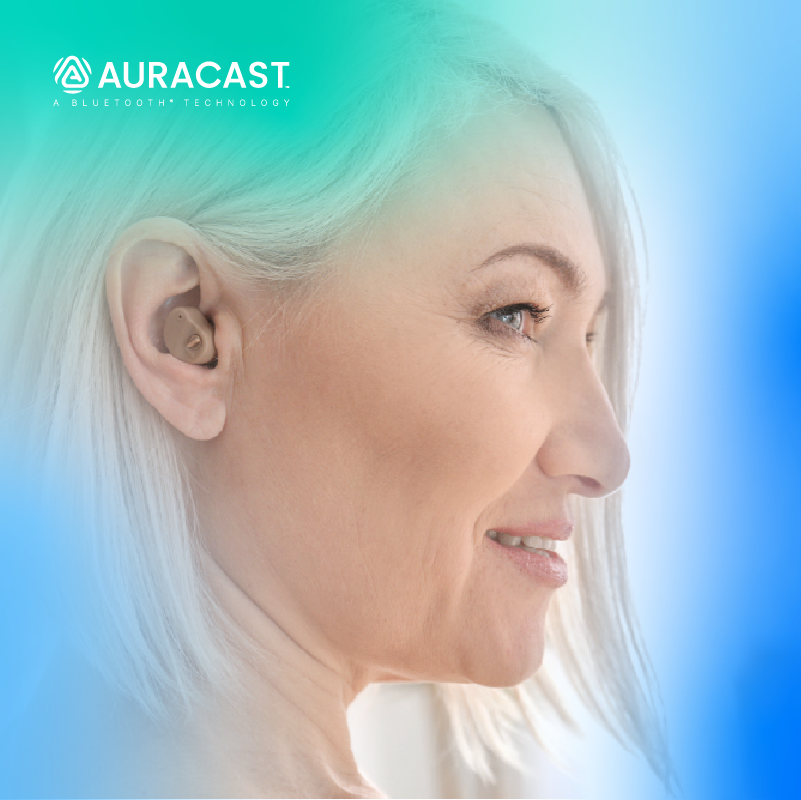
The journey started back in 2013, when a small group of hearing aid companies came to the Bluetooth Special Interest Group (SIG) to ask if they could collaborate to make hearing aids work better with mobile phones. I was at a conference in Shanghai, and, out of the blue, I was asked if I could help by chairing that development. The intervening years have been a fascinating journey.
The initial intention was to find a low-power way of getting audio from phones and PCs to hearing aids. Nothing too revolutionary, but it needed to be much lower power, as hearing aid users typically wear them for around ten hours a day without taking them out to recharge. So, minimising power consumption was vital. They also wanted to support stereo. This was before anyone had thought of wireless earbuds, so it was breaking a lot of new ground.
The biggest innovation was to find a way for the same audio to be distributed to multiple sets of hearing aids at the same time. That would mimic the experience that hearing aid users had with inductive audio loops. These, known as telecoil loops, were used in theatres and public buildings to help hearing aid users pick up the same audio signal. That was something Bluetooth® technology had never done before. All Bluetooth audio products had a one-to-one connection. The approach had always been for a user to send a single audio stream from their phone or PC to their headphones or speakers. Now, multiple people could listen to the same audio at the same time.
That may sound pretty simple, but the subtleties get very interesting. That became obvious when we started talking to people with hearing loss and people who are passionate about the quality of their music. Those two communities drive very different design paths in the hearing aid and consumer audio industries. The latter has become focused on ultimate audio quality but often sees that as a common nirvana for all of its users. In contrast, the hearing aid industry is very aware of the different levels and types of hearing loss their users face and puts a lot of effort into allowing each of them to customise their hearing experience. At the most basic level, it allows everyone to set their own listening volume.
Individual audio control
Providing individual control is a subtle difference in perspective, but it has a major effect on the way that we designed Auracast™ broadcast audio. If you think of a family sitting listening to their TV, some may be listening to the ambient sound from the TV while others may be using hearing aids. Traditionally, that leads to an argument about the volume level, with everyone fighting to turn it up or down. With Auracast™ broadcast audio, each set of hearing aids has its own personal volume control, independent of what the TV is doing. Everyone can listen at the volume they want. Each individual can switch from the TV to take a phone call without interrupting the other family members. For the first time, everyone can do what they want independently. Which is turning the way Bluetooth audio traditionally works on its head.
One other innovation was the realisation that those family members might not want to listen to the same audio stream. As TV streaming has developed, some of the streaming companies have realised that many soundtracks can be difficult for some viewers to follow, especially where there are loud background noises or music. Film companies have known this for years and include audio accessible tracks which reduce the background noise and enhance conversations, which are usually sent to the telecoil installations in cinemas. TV streamers have started doing this as well, but have had no way to separate the streams for different listeners. Either everyone had to listen to the normal stream, or everyone had to hear the accessible stream. Seeing the opportunity to make life easier, we designed Auracast™ broadcast audio so that it could transmit multiple different audio streams at the same time. Once again, the choice of what to listen to is made by each listener.
The ability to transmit multiple different audio streams is not limited to a choice of a normal or accessible stream. They could also contain different languages. So, some listeners in the room could watch a program in Korean while others could choose a dubbed English version.
Seeing the opportunity to make life easier, we designed Auracast™ broadcast audio so that it could transmit multiple different audio streams at the same time.
Adopting Auracast™ broadcast audio
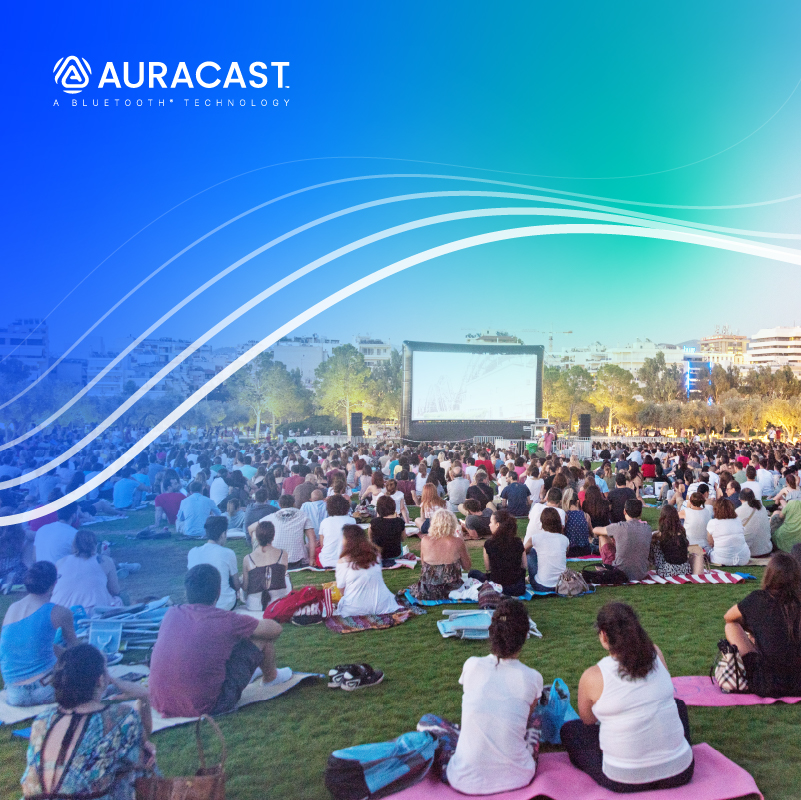
As we started to explain and prototype these new ways of listening, we found that the consumer audio industry became very interested in the new possibilities. Shortly after we’d started working on the new specifications, the first Bluetooth® wireless earbuds had appeared on the market. These solved a few of the problems we’d identified in proprietary ways, but were just a stepping stone on the way to what we were aiming for. We suddenly found a much wider audience for the features that were being developed within the Auracast™ solution. What was fascinating was that they didn’t just come from the members designing the specifications or their companies. Alongside their input, we actively went out and talked to potential users, taking their feedback into account as we developed the new standards.
Fast forward ten years, and we released the first group of specifications. For those of us writing the specifications, we knew that we would need to be patient before we saw products come to market. Miniature products like hearing aids and earbuds are incredibly difficult to design and manufacture. We were also aware of how many steps it took to get inductive telecoil loops deployed in buildings and public infrastructure — that was a process that traditionally took decades rather than years. But we were about to be surprised.
As the first products started to appear, we began to see a new level of excitement coming back from early adopters, as well as larget scale implementers. Normally, with new technology, those early adopters are young and enthusiastic, but this time we saw a much wider range of feedback. We also saw an unexpected range of products. There were hearing aids and Auracast™ transmitters, which addressed the original use cases, but there were also party speakers, which people could connect together for impromptu parties. Smartphones started to include applications which let you share a music stream with friends. TVs included Auracast™ capabilities, ready for new use cases.
Most importantly, people started playing with these new products, doing things we’d expected but also thinking up new uses we’d not envisaged. The biggest surprise was that infrastructure owners, such as theatres, churches, and even bus operators, took the plunge and started experimenting. It normally takes between five and fifteen years for hearing assistance to be specified and installed in public spaces. Now, people were buying Auracast™ products online and doing it in five days.
Continued Auracast™ momentum
As momentum has gathered, I’ve been fortunate to visit and talk to many of the people who have made these installations happen. I’ve heard Auracast™ broadcast audio in small village halls and large theatres. I’ve spoken to a composer as one of his works was broadcast by an Auracast™ solution in a major international concert hall. There have been conversations with people designing airports, train stations, schools, and railway carriages — all of whom want to use Auracast™ broadcast audio in interesting ways.
It’s also being promoted at hearing wellness festivals. During World Hearing Day on 3 March 2026, many people experienced the potential of Auracast™ broadcast audio for the first time and loved it. An amazing number of different people are beginning to think about how shared audio can change the way they communicate, whether that’s for public information, new forms of entertainment, or just helping everyday conversations.
We’re getting fascinating feedback about how Auracast™ broadcast audio can help people who have issues with crowds and noisy environments, helping them to have better experiences when they’re out in their communities. They’re also telling us what else they’d like to see (or hear), which is informing the next generation of specifications we’re working on.
We’re getting fascinating feedback about how Auracast™ broadcast audio can help people who have issues with crowds and noisy environments, helping them to have better experiences.
It is an absolute joy for us to see the way that Auracast™ broadcast audio is being taken up and used. If you’ve not experienced it yet, it’s coming your way and will soon be in your phones, TVs, PCs, earbuds, and the buildings and infrastructure around you. It’s changing the way that we’re able to use audio, bringing in a new wave of innovation. I don’t think any of us expected this return when we started, but it has been a privilege to be part of its development.
エンジニアという仕事の醍醐味のひとつは、自分が関わった製品が実際に使われている場面に出会えることです。自分が関わったものが、見知らぬ誰かの役に立っている光景を目にしたときの感動は、なかなか言葉では言い表せません。
標準化に携わっていると、その感動はさらに大きなものになります。さまざまな人々とアイデアをぶつけ合いながら形にしたものが、個々の要素の寄せ集めを超える価値を生み出すことがあるからです。ときには、自分たちも想像していなかった使い方を人々が見つけ、新しい働き方や暮らしを切り拓いていくこともあります。それが、Auracast™ ブロードキャスト オーディオに携わってきた中で、最も大きなやりがいのひとつです。
はじまり
Auracast™の歩みは2013年に始まりました。補聴器メーカー数社からなる小さなグループがBluetooth SIG(Special Interest Group)を訪ね、補聴器と携帯電話の連携をより良くするために協力できないかと相談してきたのです。私は、当時、上海での会議に参加していましたが、突然、その開発の議長を務めてほしいと依頼されました。そこからの年月は、実に刺激的なものでした。
当初の狙いは、スマートフォンやPCから補聴器へ音声を届けるための、低消費電力な仕組みを見つけることでした。そこまで革命的な発想ではありませんでしたが、消費電力は徹底的に抑える必要がありました。補聴器ユーザーの多くは、1日に約10時間、充電のために外すことなく装用し続けるためです。また、ステレオ対応も求められていました。当時はまだワイヤレスイヤホンという発想自体が一般的ではなく、多くの面で新しい領域への挑戦でした。
最大のイノベーションは、同じ音声を複数の補聴器に同時に届ける方法を見つけたことです。これは、補聴器ユーザーが従来利用してきた誘導ループと同様の体験を再現するものでした。こうした仕組みはテレコイルループ(補聴器向けの磁気ループ方式)として、劇場や公共施設で利用されています。しかしBluetooth®技術でこれを実現したことは、それまで一度もありませんでした。
従来のBluetoothオーディは、すべて1対1の接続が前提でした。ユーザーがスマートフォンやPCからヘッドフォンやスピーカーへ単一の音声ストリームを送るのが一般的だったのです。この新しいアプローチにより、複数の人が同じ音声を同時に聴けるようになりました。
一見シンプルに思えるかもしれませんが、その背後には非常に奥深い設計上の課題がありました。聴こえにくさを抱える方々や、音質に強いこだわりを持つ方々と話を重ねる中で、それが明らかになっていきました。この2つのコミュニティは、補聴器業界とコンシューマーオーディオ業界において、まったく異なる設計思想を持っています。後者は究極の音質を追求し、その最適解はすべてのユーザーに共通するものと考える傾向があります。一方、補聴器の分野では、ユーザーごとに異なる聴こえ方に対応するため、一人ひとりが自分に合った聞こえ方を選べることが重視されます。その基本となるのが、個別の音量調整です。
音声を一人ひとりが個別にコントロールできる
個別に音声コントロールできるという考え方は一見小さな違いに見えますが、Auracast™ ブロードキャスト オーディオの設計に大きな影響を与えました。たとえば、家族でテレビを見ている場面を想像してみてください。テレビのスピーカー音をそのまま聞く人もいれば、補聴器を使う人もいます。従来は音量をめぐって、上げたい人と下げたい人の間で取り合いになりがちでした。Auracast™ ブロードキャスト オーディオでは、それぞれの補聴器側で音量を個別に調整できます。テレビ本体の設定に左右されることはありません。誰もが自分にとってちょうど良い音量で聞けるのです。また、テレビ視聴中に電話がかかってきても、他の家族の視聴を妨げることなく切り替えることができます。それぞれが独立して行動できるようになるーーこれは、従来のBluetoothオーディオのあり方を大きく変えるものでした。
さらに、そもそも家族全員が同じ音声を聞きたいわけではない、という点にも気づきました。ストリーミングサービスの普及により、背景音や音楽が大きい場面では、音声を聞き取りにくいと感じる人がいることが明らかになってきました。映画業界では以前から、背景音を抑えて会話を聞き取りやすくしたアクセシビリティ対応の音声トラックが提供されてきましたが、これは主に劇場のテレコイル設備向けでした。テレビ配信でも同様の取り組みは始まっていましたが、視聴者ごとに音声を分ける手段はありませんでした。通常音声かアクセシブル音声か、全員でどちらかを選ぶしかなかったのです。
そこで私たちは、Auracast™ ブロードキャスト オーディオが複数の異なるオーディオストリームを同時に配信できるよう設計しました。これにより、何を聞くかはリスナーが自由に選べるようになりました。
この機能は、アクセシビリティ対応にとどまりません。異なる言語の音声も同時に配信できます。同じ部屋で、ある人は韓国語版を、別の人は日本語吹き替え版を楽しむといったことも可能になります。
Auracast™ ブロードキャスト オーディオの普及
こうした新しい「音の使い方」を説明し、プロトタイプで実証していく中で、コンシューマーオーディオ業界が大きな関心を示し始めました。ちょうどその頃、最初のBluetooth®ワイヤレスイヤホンが市場に登場しました。これらは一部の課題を独自の方法で解決していましたが、私たちの目指す方向性の一歩に過ぎませんでした。一方で、Auracast™ソリューションで開発されていた機能には、想像以上に幅広い利用者層が関心を寄せていることが分かりました。その関心は、仕様策定に関わる企業だけにとどまりませんでした。私たちは積極的にユーザーのもとへ足を運び、そのフィードバックを標準仕様に反映していきました。
それから10年後、最初の仕様群が公開されました。製品が市場に出るまでには時間がかかると覚悟していました。補聴器やイヤホンのような小型デバイスの設計・製造は非常に難しく、また公共インフラへの導入には通常、数年から数十年単位の時間がかかるからです。しかし、その予想はうれしい意味で覆されました。
製品が登場し始めると、アーリーアダプターだけでなく、大規模導入を進める事業者からも強い反響が寄せられました。製品の広がりも予想以上でした。補聴器やAuracast™送信機に加え、複数のスピーカーをつないで楽しむパーティースピーカーも登場しました。スマートフォンには音楽を共有できるアプリが登場し、テレビにもAuracast™機能が組み込まれ始めました。そして何より重要なのは、人々がこれらの製品を自由に使い始めたことです。想定していた用途だけでなく、新しい使い方が次々と生まれました。
特に印象的だったのは、劇場、教会、さらにはバス事業者などのインフラ提供者が導入に踏み切り、実験的な活用を始めたことです。従来、公共空間に聴覚支援システムを導入するには5年から15年かかるのが一般的でした。しかし今では、製品をオンラインで購入し、わずか数日で使い始めることができます。
Auracast™の広がり
この勢いの中で、私はさまざまな現場を訪れ、多くの人と話をする機会を得ました。小さな公会堂から大規模な劇場まで、Auracast™の音を実際に体験してきました。国際的なコンサートホールでは、作曲家の作品がAuracast™を通じて配信されている場面にも立ち会いました。
空港、鉄道駅、学校、車両設計に関わる人々とも対話を重ねてきました。誰もが、それぞれの方法で、Auracast™ ブロードキャスト オーディオを活用したいと考えています。
また聴覚ケアに関するイベントでも普及が進んでいます。2026年3月3日の「世界聴覚デー」では、多くの人がAuracast™ ブロードキャスト オーディオの可能性を初めて体験し、その可能性に驚きと感動を覚えました。音声を共有することで、コミュニケーションのあり方が変わり始めています。公共情報の提供、新しいエンターテインメント、日常会話のサポートなど、その用途は広がり続けています。
騒がしい環境や人混みが苦手な人にとって、Auracast™ ブロードキャスト オーディオはより快適な体験をもたらします。地域社会の中での活動がしやすくなったという声も多く寄せられています。また、今後どのような機能を期待するかというフィードバックも、次世代仕様の開発に活かされています。
私たちにとって、Auracast™ ブロードキャスト オーディオがこれほど広く受け入れられ、実際に使われている様子を見ることは、大きな喜びです。まだ体験したことがない方にも、その機会はもうすぐ訪れるでしょう。Auracast™は、スマートフォン、テレビ、PC、イヤホン、そして身のまわりの建物やインフラへと広がりつつあります。音の使い方そのものを変え、新たなイノベーションの波を生み出しているのです。Auracast™はオーディオの使い方の可能性を広げ、新しいイノベーションの波をもたらしています。開発当初、このような広がりを予想していた人はほとんどいなかったでしょう。この歩みに関われたことを、心から誇りに思います。
