Bluetooth packets are hard to hit
When trying to avoid collisions, it's best to be small and fast. For example, when compared to other low-power wireless mesh networking technologies, Bluetooth packets are typically half the size and four times faster. Having small, fast packets enables more efficient use of spectrum and significantly lowers the probability of collisions.
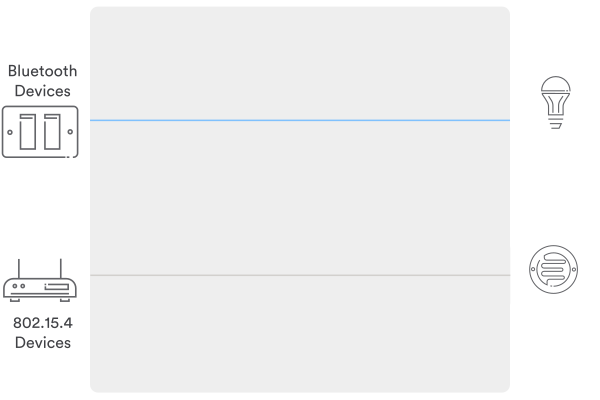
Bluetooth packets avoid conflict
Finding a clear path is half the battle. Bluetooth technology utilizes a form of frequency-hopping spread spectrum (FHSS) called adaptive frequency hopping (AFH). Like all FHSS technologies, Bluetooth divides the frequency band into smaller channels (e.g. 40 channels in the case of Bluetooth Low Energy) and rapidly hops between those channels when transmitting packets. To further reduce the chance of interference, Bluetooth adapts its hopping sequence. Channels that are noisy and busy are dynamically tracked and avoided when sending packets.
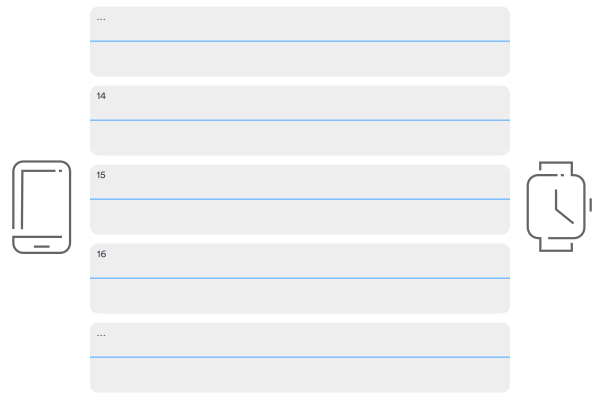
Bluetooth devices can send confirmations
Despite best attempts to minimize it, packet loss will happen. One technique Bluetooth technology uses to compensate for packet loss is sending acknowledgements, allowing receiving devices to confirm the successful receipt of data from the sender. Acknowledgements are a technique available for Bluetooth point-to-point (packet acknowledgement) and mesh networking (message acknowledgement) connections.
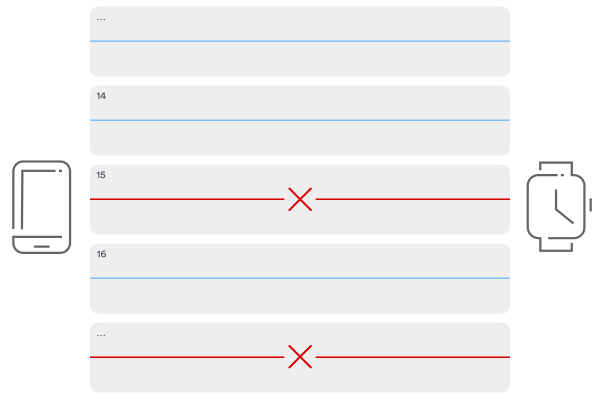
Bluetooth devices can send multiple copies
Relying on acknowledgements is not always practical. For example, imagine if a single light switch controlling 100 lights had to wait for and track 100 acknowledgements every time it sent an on/off message. To address situations like this, Bluetooth mesh networking also includes a retransmission feature that automatically sends multiple copies of a message in rapid succession. Automatic, rapid retransmission of mesh messages dramatically increases the probability of successful receipt, even in the noisiest environments.
